Relaxation in Japan often depends less on dramatic escape than on repeated ways of slowing the body and mind. Onsen, neighborhood baths, short trips, quiet cafés, gardens, and seasonal walks matter because they create deliberate pauses within busy routines. Looking closely at ordinary routines often explains more than a list of isolated facts.
In this article, the subject is treated as part of lived Japanese culture rather than as a decorative symbol. That means paying attention to timing, space, habit, and the emotional atmosphere that grows around repeated practice.
Cleanliness before immersion
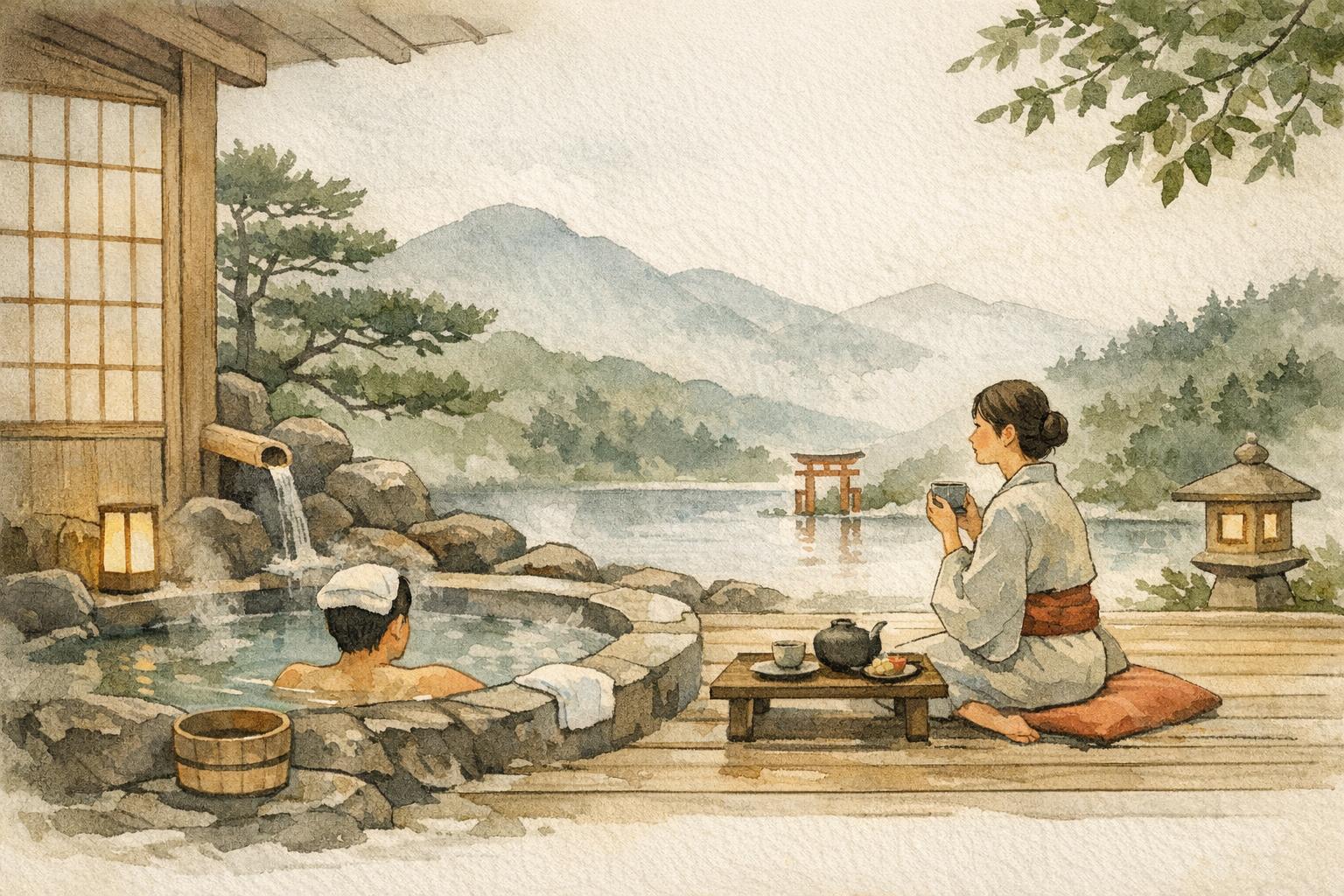
The clearest place to begin is with one practical fact. Japanese bathing culture is structured by preparation, which is why washing comes before shared soaking. This sequence keeps the bath itself conceptually clean and reinforces the idea that communal comfort depends on personal care. The ritual may seem strict from the outside, but it actually makes shared relaxation possible. This is where broad stereotypes usually become too thin.
There is also a social layer to notice. In that sense, rules are part of creating ease rather than interrupting it. What looks natural usually depends on learned timing, repeated exposure, and a shared sense of what fits the situation.
Order in the bathing room
A bath feels more restful when everyone has already contributed to the cleanliness of the space. The preparation teaches mutual respect through the body. That is often the moment when the subject stops feeling abstract and starts feeling lived.
Warm water as emotional reset
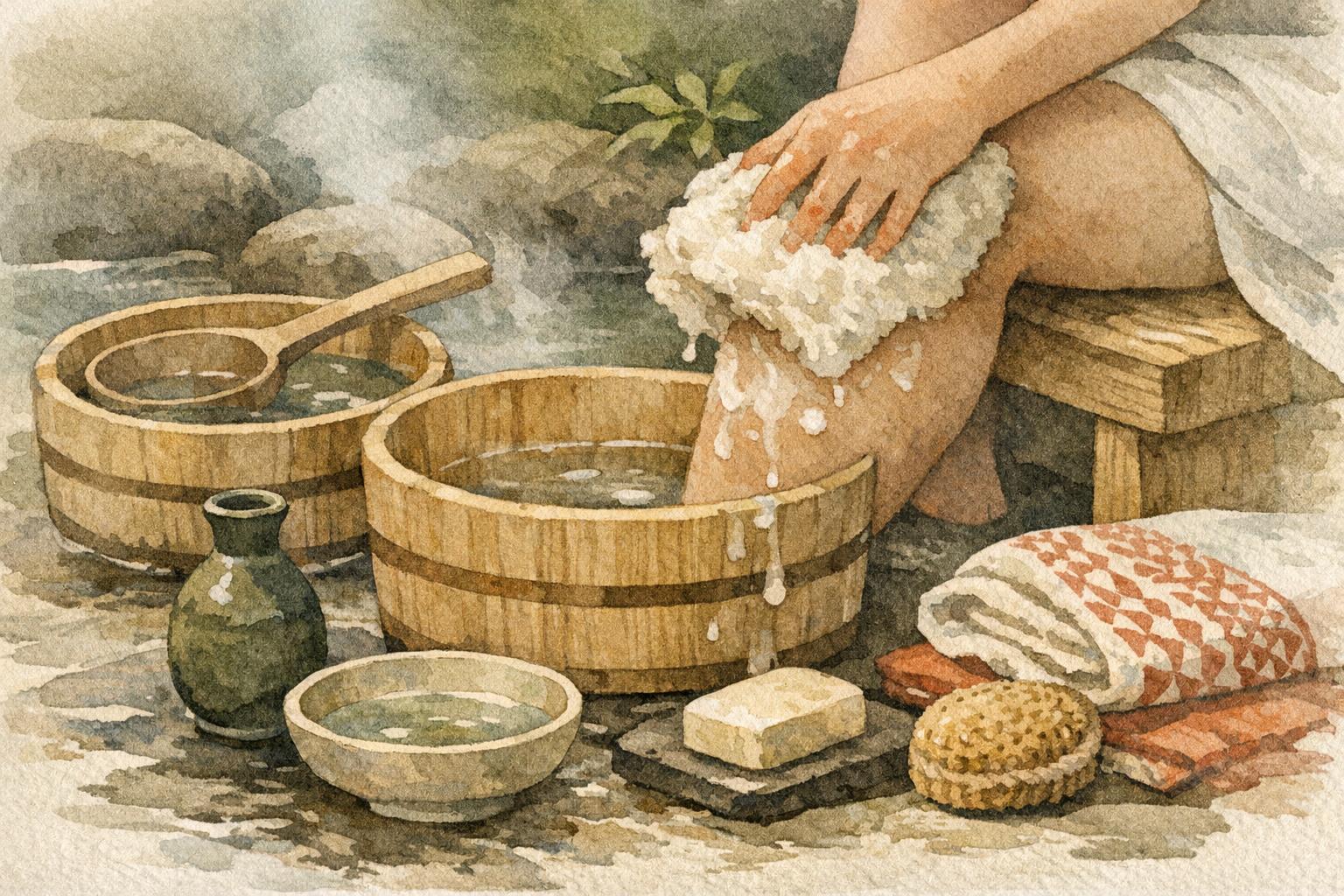
A closer look makes the pattern easier to read. Bathing in Japan often carries an emotional function because heat slows the body and marks a transition away from work or travel strain. A neighborhood sento may offer ordinary relief at the end of the day, while an onsen frames that relief as a destination in itself. Season matters here too, since cold weather and mountain settings can intensify the experience of release. The detail matters because it changes how the whole subject is understood.
There is also a social layer to notice. What links both forms is the sense of being restored through immersion and pause. What looks natural usually depends on learned timing, repeated exposure, and a shared sense of what fits the situation.
From neighborhood routine to travel ritual
Stepping out into cool night air after a hot bath is one of the small but memorable pleasures many people associate with Japan. Bathing culture is powerful because it turns contrast into comfort. That is often the moment when the subject stops feeling abstract and starts feeling lived.
Habit, space, and adaptation
The culture of rest appears in travel, bathing, scenic viewing, tea, and many small personal habits that make pressure feel manageable. Lifestyle habits in Japan often grow from practical constraints, yet they are refined until they also communicate care, self-control, and social awareness. This is one reason the topic tends to feel ordinary to people in Japan while seeming highly distinctive to outside observers.
These forms endure because they respect both limited time and the deeper need for atmosphere, temperature, and silence. Continuity here does not mean the form never changes. It means newer habits often settle on top of older ways of noticing, organizing time, and sharing space.
Ordinary routines
If you want to follow the same thread from another angle, see Why Japanese Food Presentation Matters So Much and Why Japanese Homes Are So Small (And Smart). Placed beside one another, those essays show how one part of Japanese life opens into another.
Closing Reflection
Looking at relaxation in Japan shows how rest is often arranged through environment as much as through inactivity. The topic fits naturally beside work culture, traditional homes, and the cultural value placed on quiet and orderly space.
Read beside essays on cities, food, and everyday practice, the subject becomes part of a wider cultural pattern rather than a separate curiosity.
Another useful way to read this subject is to notice how often it appears without announcing itself. Relaxation in Japan often depends less on dramatic escape than on repeated ways of slowing the body and mind. That quiet familiarity is one reason the topic can feel deeper over time instead of becoming exhausted once the basic facts are known.
It also helps to place the topic in relation to nearby subjects rather than isolating it. The essays on Why Japanese Food Presentation Matters So Much and Why Japanese Homes Are So Small (And Smart) show how the same cultural logic travels into adjacent parts of Japanese life.
Another useful way to read this subject is to notice how often it appears without announcing itself. Relaxation in Japan often depends less on dramatic escape than on repeated ways of slowing the body and mind. That quiet familiarity is one reason the topic can feel deeper over time instead of becoming exhausted once the basic facts are known.
It also helps to place the topic in relation to nearby subjects rather than isolating it. The essays on Why Japanese Food Presentation Matters So Much and Why Japanese Homes Are So Small (And Smart) show how the same cultural logic travels into adjacent parts of Japanese life.