Religion in Japan is often less about fixed belief statements than about practice, season, family memory, and the emotional life of places. Shinto and Buddhism matter in daily life because they organize visits, festivals, mourning, gratitude, and a sense of connection to both ancestors and landscape. Looking closely at ordinary routines often explains more than a list of isolated facts.
In this article, the subject is treated as part of lived Japanese culture rather than as a decorative symbol. That means paying attention to timing, space, habit, and the emotional atmosphere that grows around repeated practice.
Why two traditions often coexist
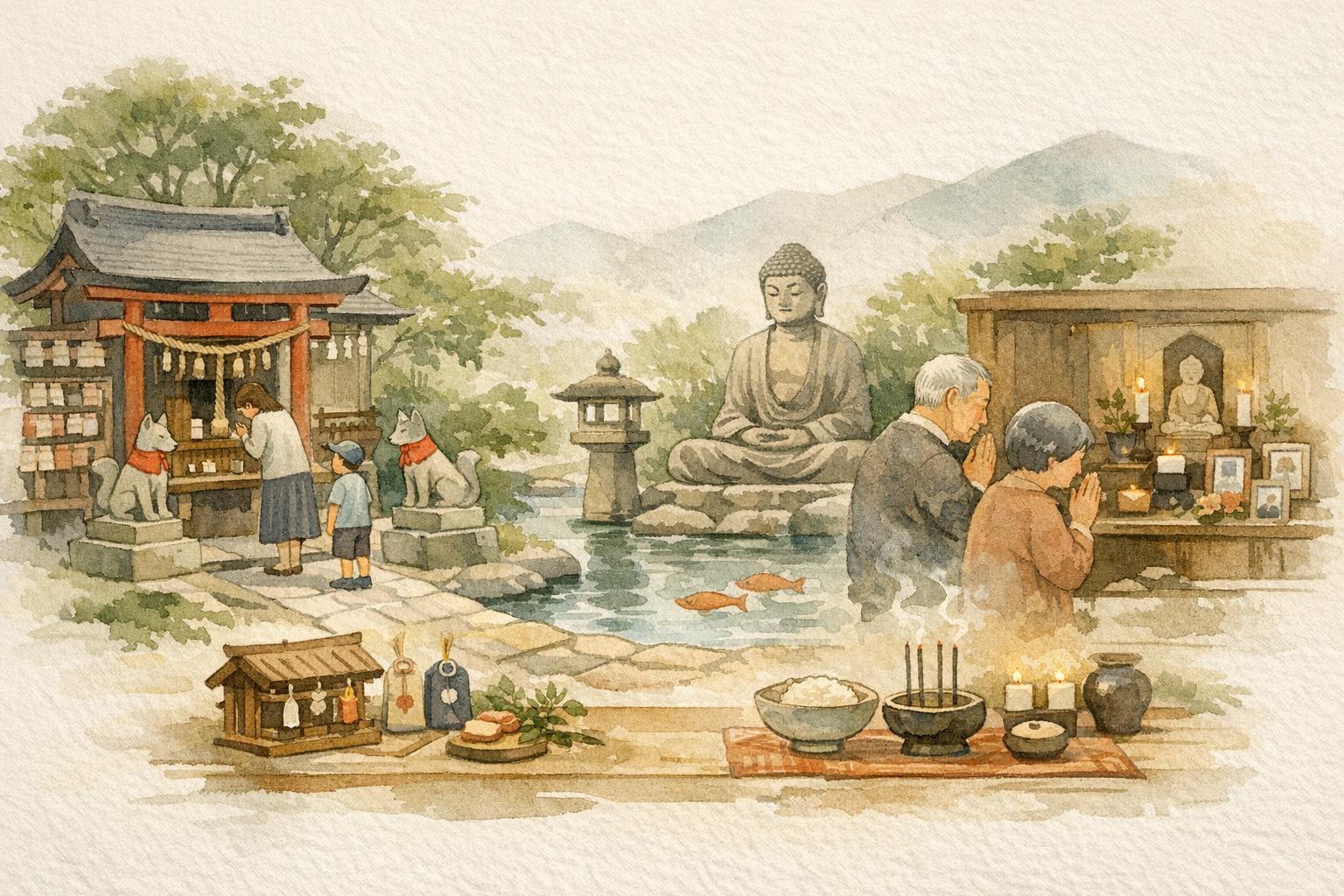
The clearest place to begin is with one practical fact. Many Japanese people move between shrine and temple settings with little sense of contradiction because the practices answer different needs. Shinto often feels close to place, season, purity, and local celebration, while Buddhism is frequently tied to death, memorial practice, and reflection. The result is a layered religious life that feels practical rather than theoretical to many households. This is where broad stereotypes usually become too thin.
There is also a social layer to notice. Coexistence matters because it allows ordinary life to hold multiple emotional registers without forcing a single language for all of them. What looks natural usually depends on learned timing, repeated exposure, and a shared sense of what fits the situation.
Shinto and Buddhism are not experienced as strict rivals
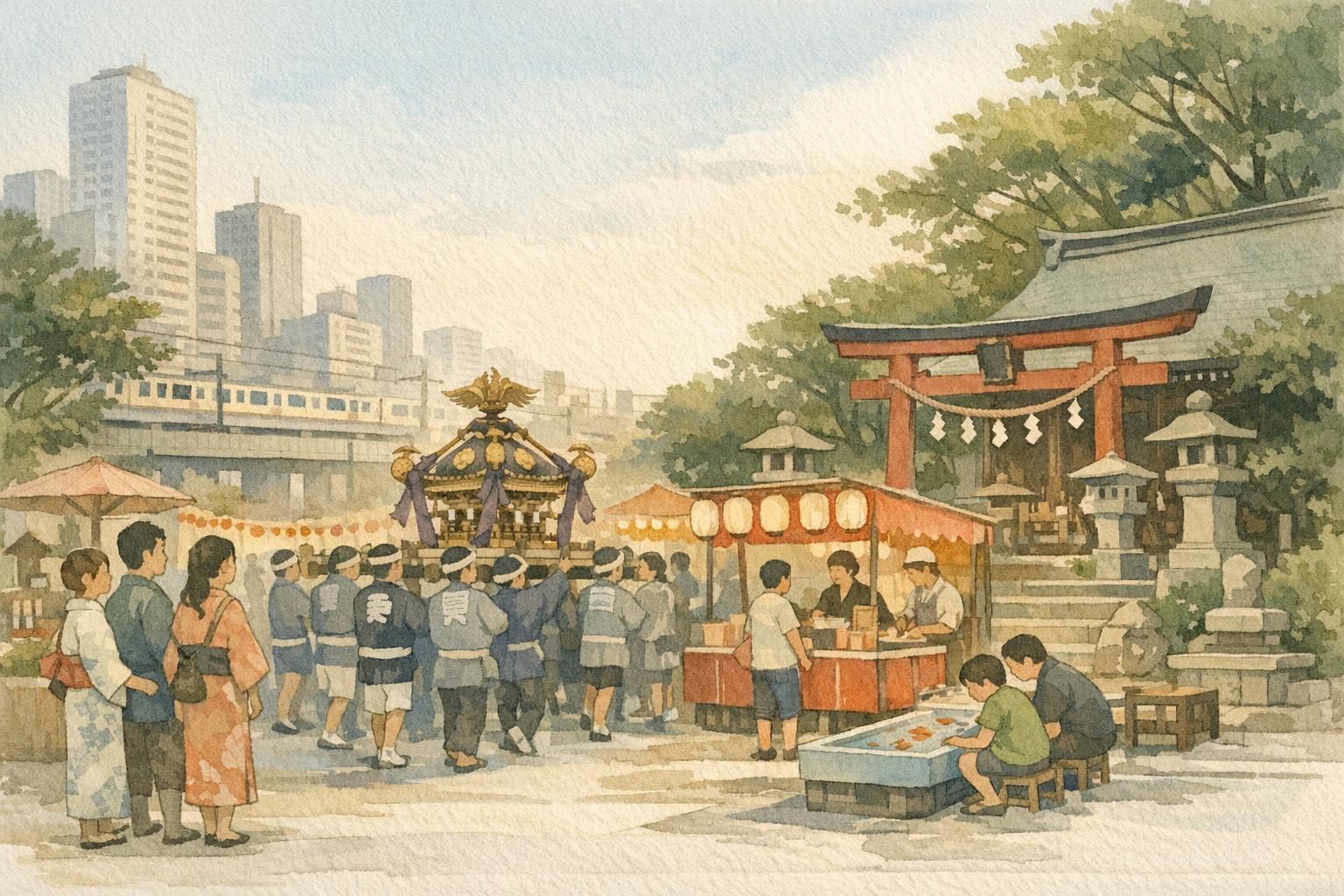
A family may celebrate a shrine festival in summer, visit a temple grave in autumn, and treat both acts as natural parts of one yearly rhythm. Religion stays durable when it fits life without demanding constant verbal explanation. That is often the moment when the subject stops feeling abstract and starts feeling lived.
Ritual in ordinary time
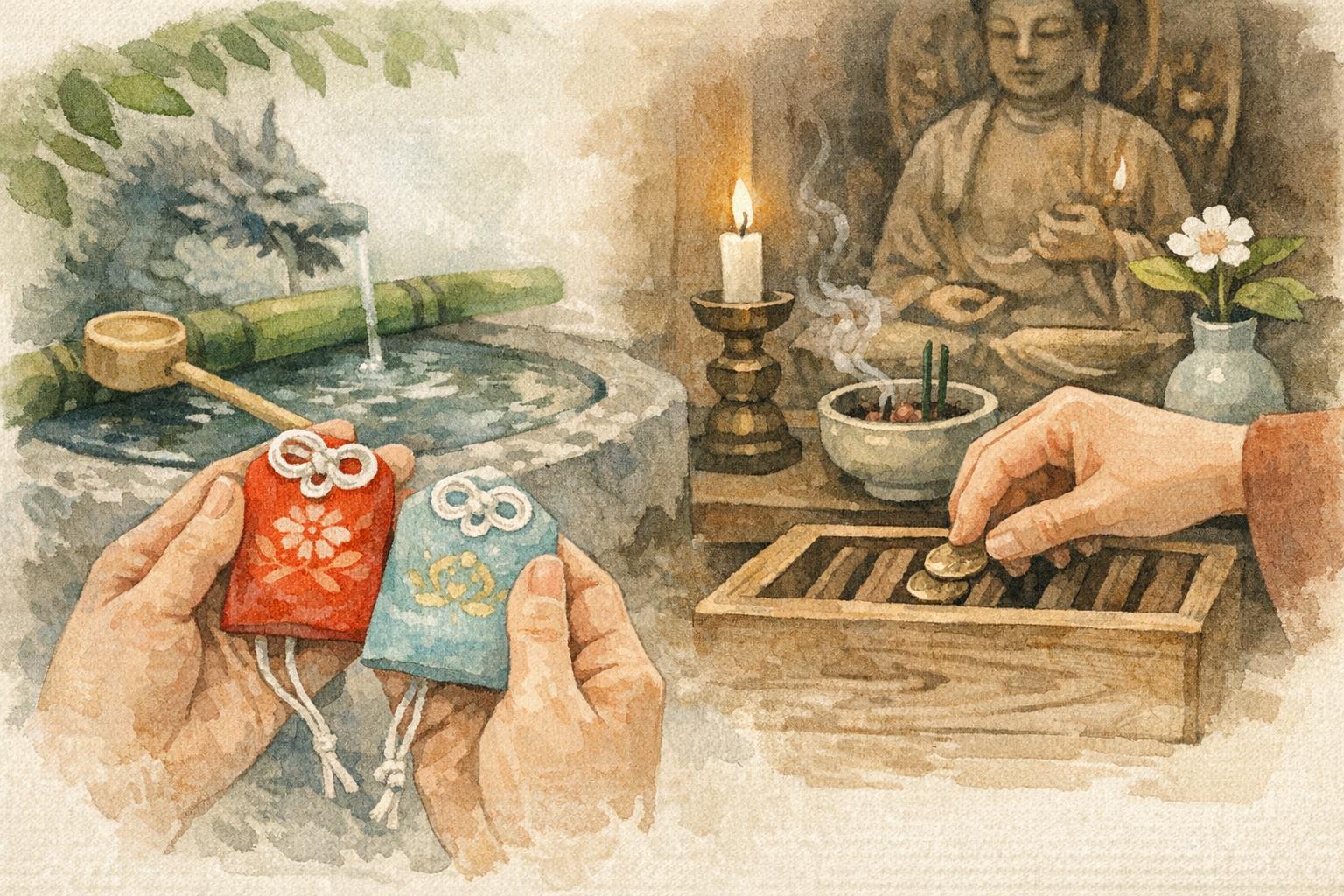
A closer look makes the pattern easier to read. Buying a charm, washing hands at a shrine basin, ringing a bell, or making a quiet offering can all feel more important than declaring belief. These practices mark transitions such as exams, travel, illness, birth, or the start of a new year. Because the acts are repeatable and public, they keep religion socially visible without turning it into constant argument. The detail matters because it changes how the whole subject is understood.
There is also a social layer to notice. Small rituals often endure best because they fit smoothly inside ordinary schedules. What looks natural usually depends on learned timing, repeated exposure, and a shared sense of what fits the situation.
Belonging often appears through small actions
Students visiting a shrine before entrance exams show how religious customs remain woven into modern anxieties and hopes. The everyday force of religion often lies in repetition rather than in dramatic conviction. That is often the moment when the subject stops feeling abstract and starts feeling lived.
Sacred feeling and the Japanese landscape
What matters first is the lived structure beneath the surface image. Mountains, forests, stones, gates, incense, and cemetery paths all help religion in Japan remain tied to atmosphere as much as to teaching. Sacredness is often felt through encounter with a site, a season, or a family obligation rather than through formal study alone. That bond between place and feeling keeps religious habits close to travel, local identity, and memory. Seen that way, the topic moves from symbol to daily habit.
There is also a social layer to notice. It is one reason shrines and temples still matter to people who would not otherwise describe themselves as especially devout. What looks natural usually depends on learned timing, repeated exposure, and a shared sense of what fits the situation.
Place carries spiritual memory
A quiet temple staircase in late autumn can make the religious dimension of place feel immediate without requiring many words. In Japan, religion often remains persuasive because it is encountered through embodied atmosphere. That is often the moment when the subject stops feeling abstract and starts feeling lived.
How the idea travels through daily life
People may not describe themselves as highly religious, yet shrines, temples, charms, household altars, and ritual calendars remain socially familiar. Much of Japanese culture becomes visible through repetition rather than through declaration, so small gestures often carry more meaning than formal explanation. This is one reason the topic tends to feel ordinary to people in Japan while seeming highly distinctive to outside observers.
The overlap between traditions lasts because each one addresses a different emotional register, and together they fit the rhythms of ordinary life. Continuity here does not mean the form never changes. It means newer habits often settle on top of older ways of noticing, organizing time, and sharing space.
Quiet repetition
If you want to follow the same thread from another angle, see Japanese Festivals (Matsuri) in Modern Japan and Japanese Tea Ceremony: Meaning Behind Every Move. Placed beside one another, those essays show how one part of Japanese life opens into another.
Closing Reflection
Looking closely at religion in Japan means noticing not only doctrine, but habits of visiting, remembering, and marking time. The subject sits naturally beside matsuri, New Year visits, Obon memory, and the quiet choreography of domestic and public ritual.
Read beside essays on cities, food, and everyday practice, the subject becomes part of a wider cultural pattern rather than a separate curiosity.