Japanese street food is best understood not as one cuisine, but as a moving collection of quick foods tied to festivals, shopping streets, markets, and local habits. Its appeal comes from warmth, portability, and the way simple snacks become part of social atmosphere. Looking closely at ordinary routines often explains more than a list of isolated facts.
In this article, the subject is treated as part of lived Japanese culture rather than as a decorative symbol. That means paying attention to timing, space, habit, and the emotional atmosphere that grows around repeated practice.
Why street food feels so immediate
The clearest place to begin is with one practical fact. Street food in Japan often tastes inseparable from the place where it is eaten, whether that means a festival lane, a shopping arcade, or a station-side stall. Heat, smell, movement, and waiting in a short line all shape the experience before the food even reaches the hand. That immediacy gives simple dishes a vivid social life. This is where broad stereotypes usually become too thin.
There is also a social layer to notice. Some foods become memorable because the setting completes them. What looks natural usually depends on learned timing, repeated exposure, and a shared sense of what fits the situation.
Food and atmosphere arrive together
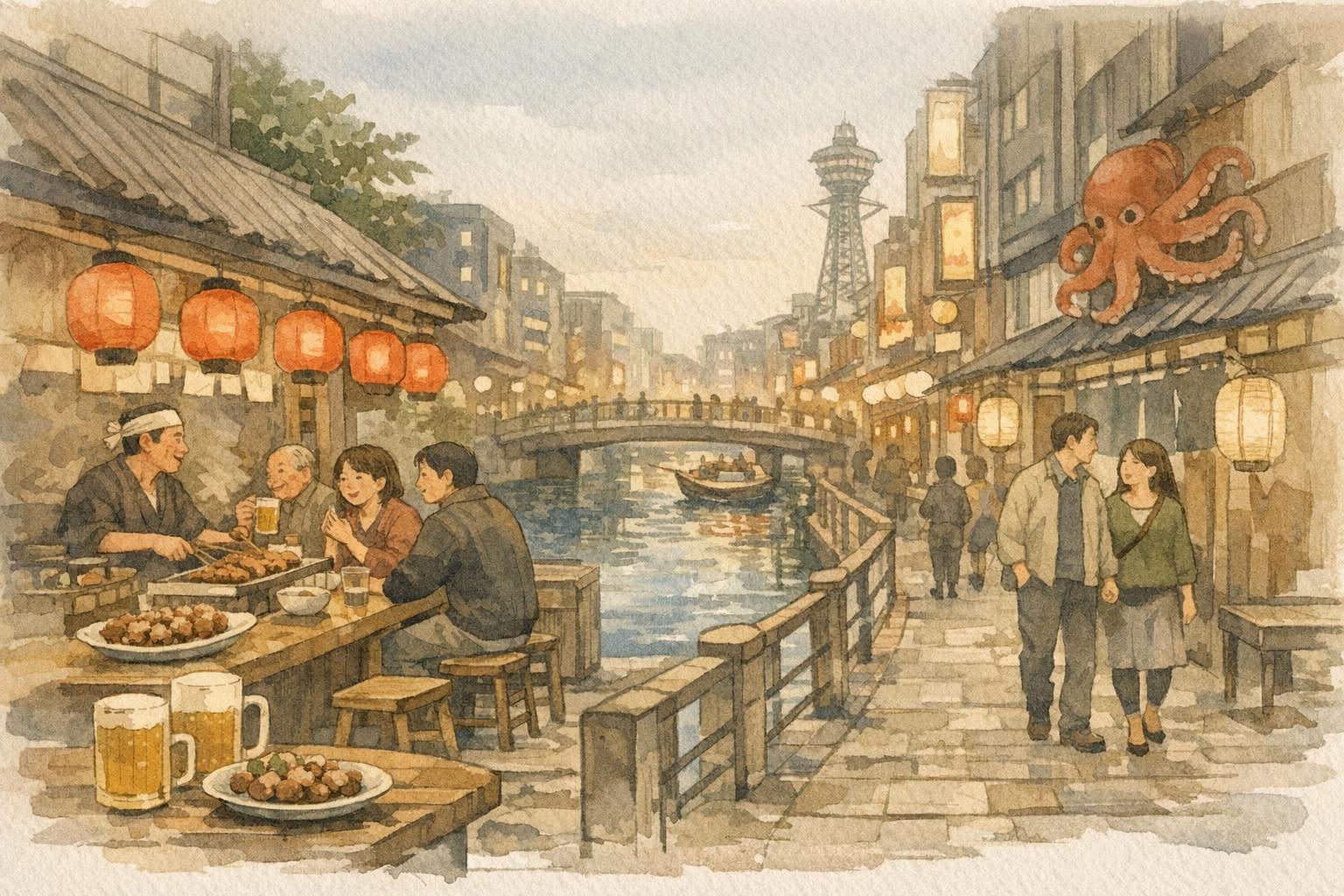
Takoyaki eaten on a busy Osaka street feels different from the same snack on a plate at home because the surrounding rhythm is part of the flavor. Casual food often becomes culturally important through context as much as through recipe. That is often the moment when the subject stops feeling abstract and starts feeling lived.
What to try first
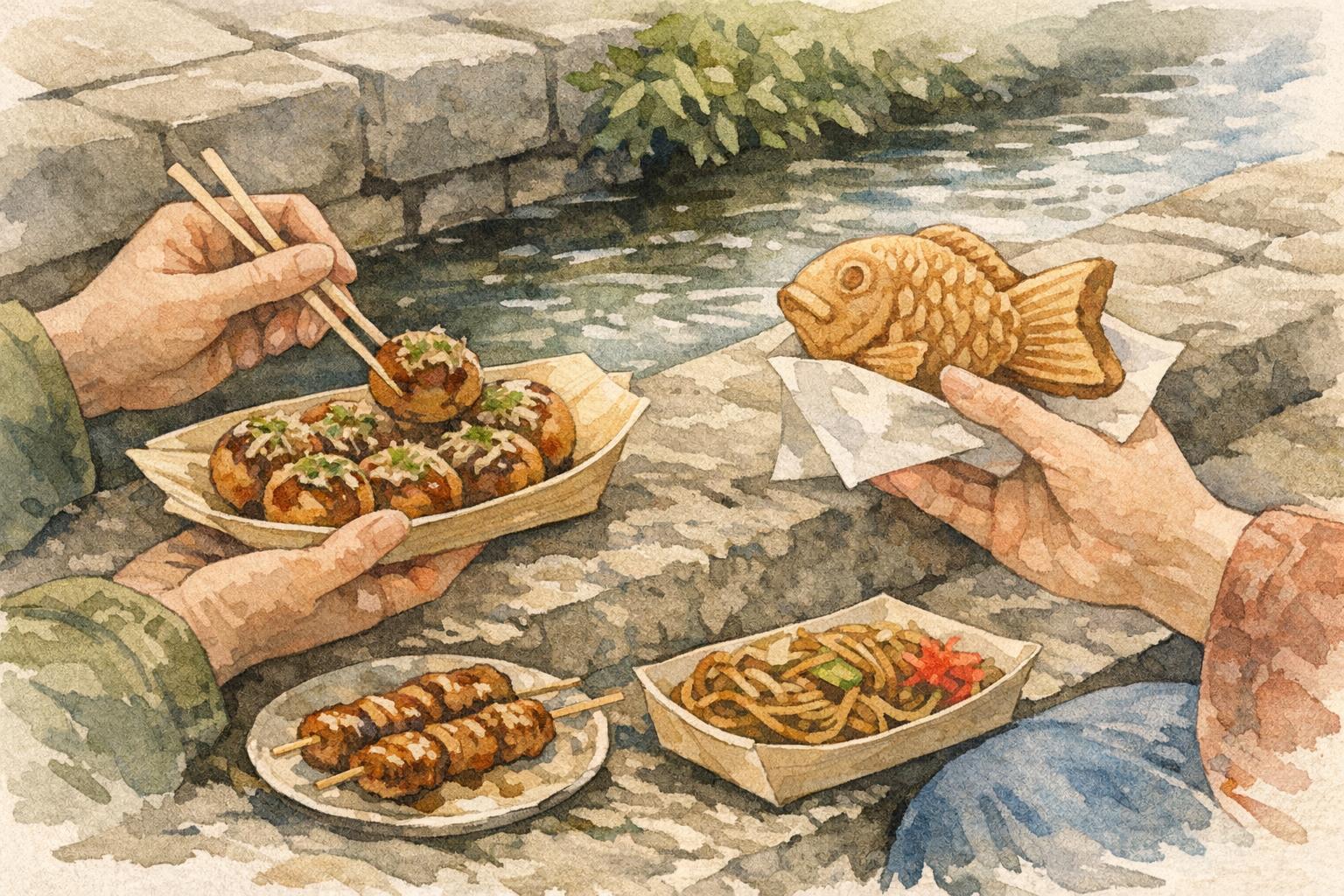
A closer look makes the pattern easier to read. Takoyaki, yakitori, taiyaki, yakisoba, karaage, and regional grilled snacks are good starting points because each shows a different side of portability and comfort. Some are savory, some sweet, and some are deeply tied to festivals or specific regions. Together they show how street food can range from playful dessert to dependable, filling meal. The detail matters because it changes how the whole subject is understood.
There is also a social layer to notice. Variety is part of what keeps the category so approachable. What looks natural usually depends on learned timing, repeated exposure, and a shared sense of what fits the situation.
A few foods explain the form quickly
A first-time visitor who tries both a sweet taiyaki and a tray of takoyaki immediately feels the range between nostalgia, novelty, and local habit. Street food introduces a food culture efficiently because it samples many moods in small form. That is often the moment when the subject stops feeling abstract and starts feeling lived.
Where street food belongs in Japanese life
What matters first is the lived structure beneath the surface image. Unlike some countries where street food dominates daily lunch, in Japan it often appears most vividly around festivals, sightseeing districts, and leisure movement. That association makes it feel festive and situational rather than merely utilitarian. Street food becomes part of memory because people encounter it while walking, watching, and sharing public time with others. Seen that way, the topic moves from symbol to daily habit.
There is also a social layer to notice. The snack is often one piece of a larger social scene. What looks natural usually depends on learned timing, repeated exposure, and a shared sense of what fits the situation.
It is tied to event and movement
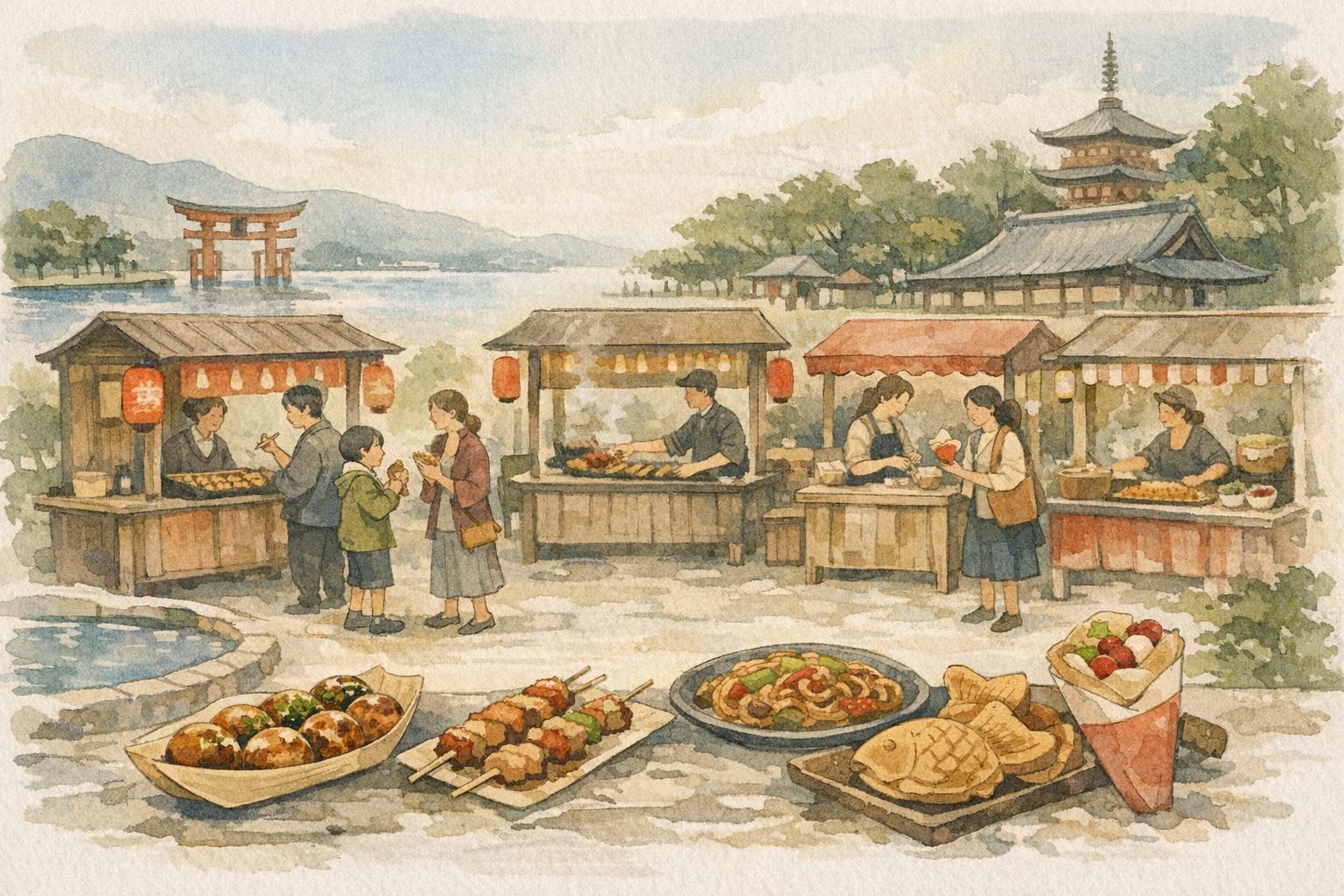
A row of temporary festival stalls can make food feel like part of celebration itself rather than a pause from it. Casual foods endure most strongly when they are woven into public rhythm. That is often the moment when the subject stops feeling abstract and starts feeling lived.
Where the table meets memory
Takoyaki, yakitori, taiyaki, yakisoba, crepes, and grilled skewers all show how casual eating helps animate public spaces in Japan. Meals in Japan often connect convenience with formality, which is why a quick bowl, a boxed lunch, and a seasonal feast can all feel culturally dense in different ways. This is one reason the topic tends to feel ordinary to people in Japan while seeming highly distinctive to outside observers.
Street food remains popular because it turns short encounters and small purchases into memorable parts of local life. Continuity here does not mean the form never changes. It means newer habits often settle on top of older ways of noticing, organizing time, and sharing space.
Regional difference
If you want to follow the same thread from another angle, see Osaka: Japan’s Food Capital and Its Unique Personality and Ramen Culture in Japan: From Street Food to Obsession. Placed beside one another, those essays show how one part of Japanese life opens into another.
Closing Reflection
Looking closely at street food shows how Japanese food culture lives not only in restaurants, but also in motion and public gathering. The subject connects naturally with Osaka, matsuri, and the broader pleasure of eating according to place and occasion.
Read beside essays on cities, food, and everyday practice, the subject becomes part of a wider cultural pattern rather than a separate curiosity.