The Japanese tea ceremony turns ordinary acts such as pouring, folding, serving, and sitting into a concentrated form of attention. Its meaning lies in how every movement, object, and pause is shaped to create respect, calm, and heightened awareness. Looking closely at ordinary routines often explains more than a list of isolated facts.
In this article, the subject is treated as part of lived Japanese culture rather than as a decorative symbol. That means paying attention to timing, space, habit, and the emotional atmosphere that grows around repeated practice.
Movement that creates atmosphere
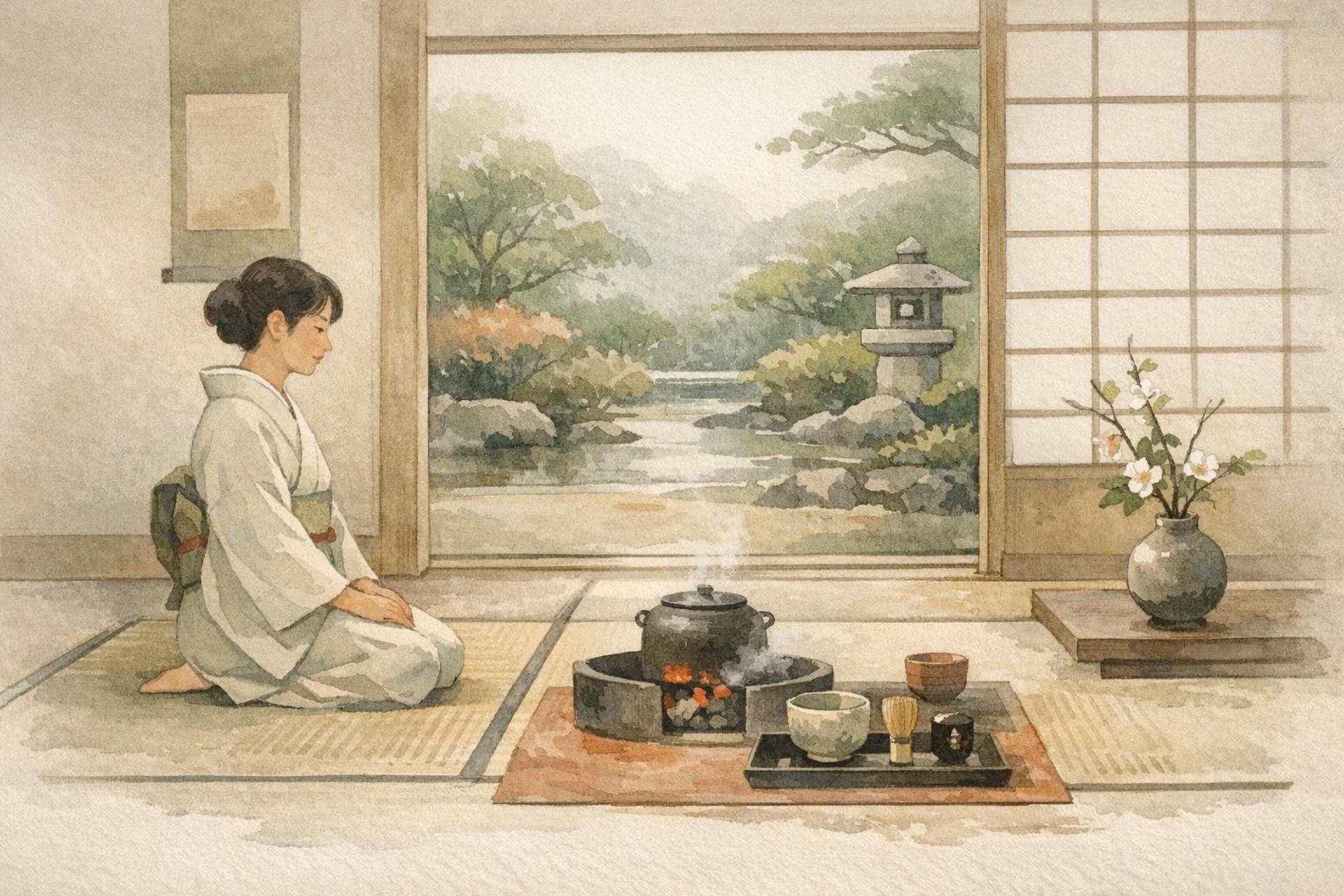
The clearest place to begin is with one practical fact. Tea ceremony uses sequence and gesture to produce a shared atmosphere in which attention becomes unusually focused. The host's movements are deliberate not to impress the guest, but to make the room feel measured and clear. That slowness changes how participants perceive tools, sound, and even silence. This is where broad stereotypes usually become too thin.
There is also a social layer to notice. The ceremony therefore works through bodily education as much as through symbolism. What looks natural usually depends on learned timing, repeated exposure, and a shared sense of what fits the situation.
Nothing is casual, nothing is rushed
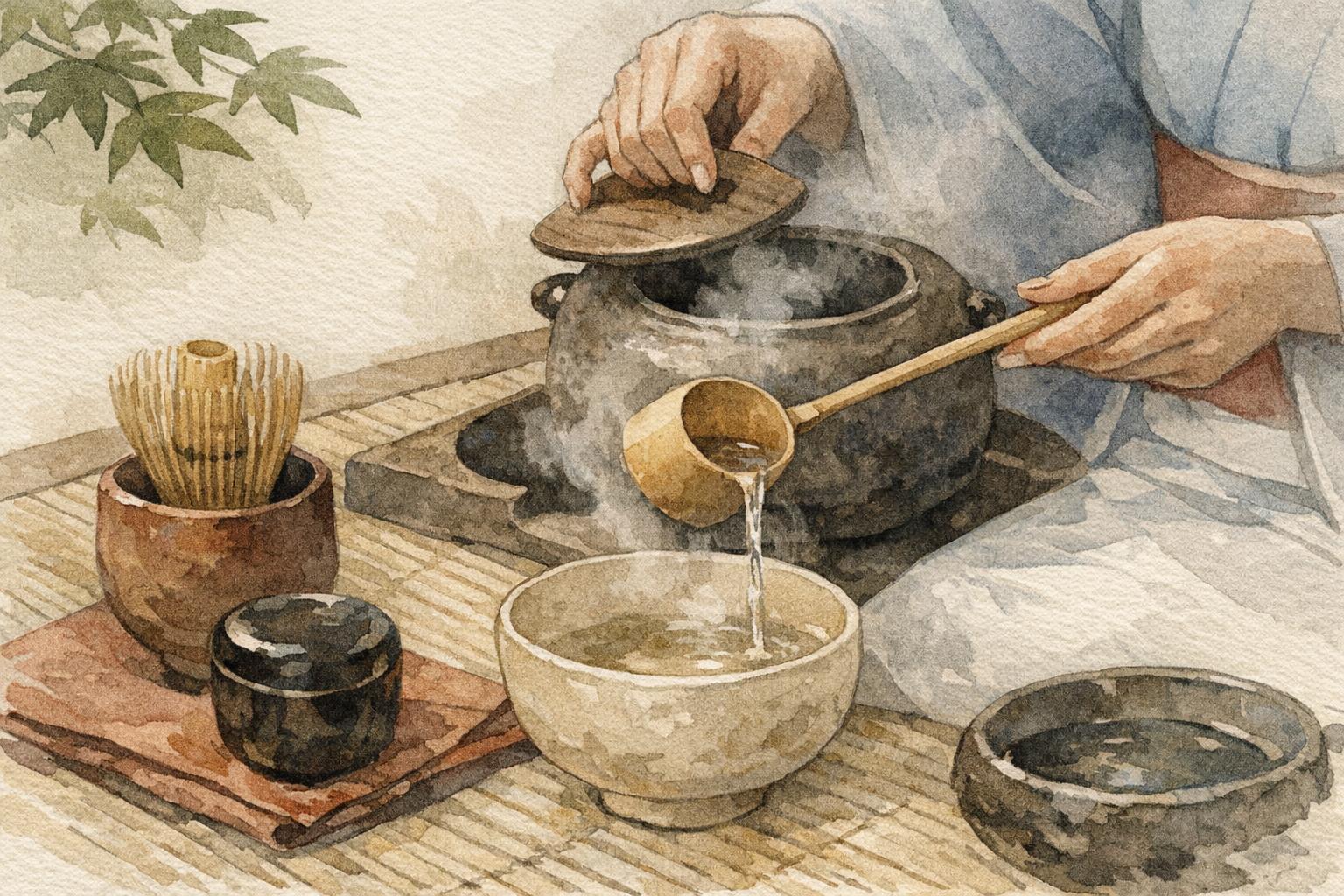
The sound of water, the placement of the bowl, and the interval before drinking all become part of the event's meaning. Atmosphere is built through timing rather than decoration alone. That is often the moment when the subject stops feeling abstract and starts feeling lived.
Hospitality reduced to essentials
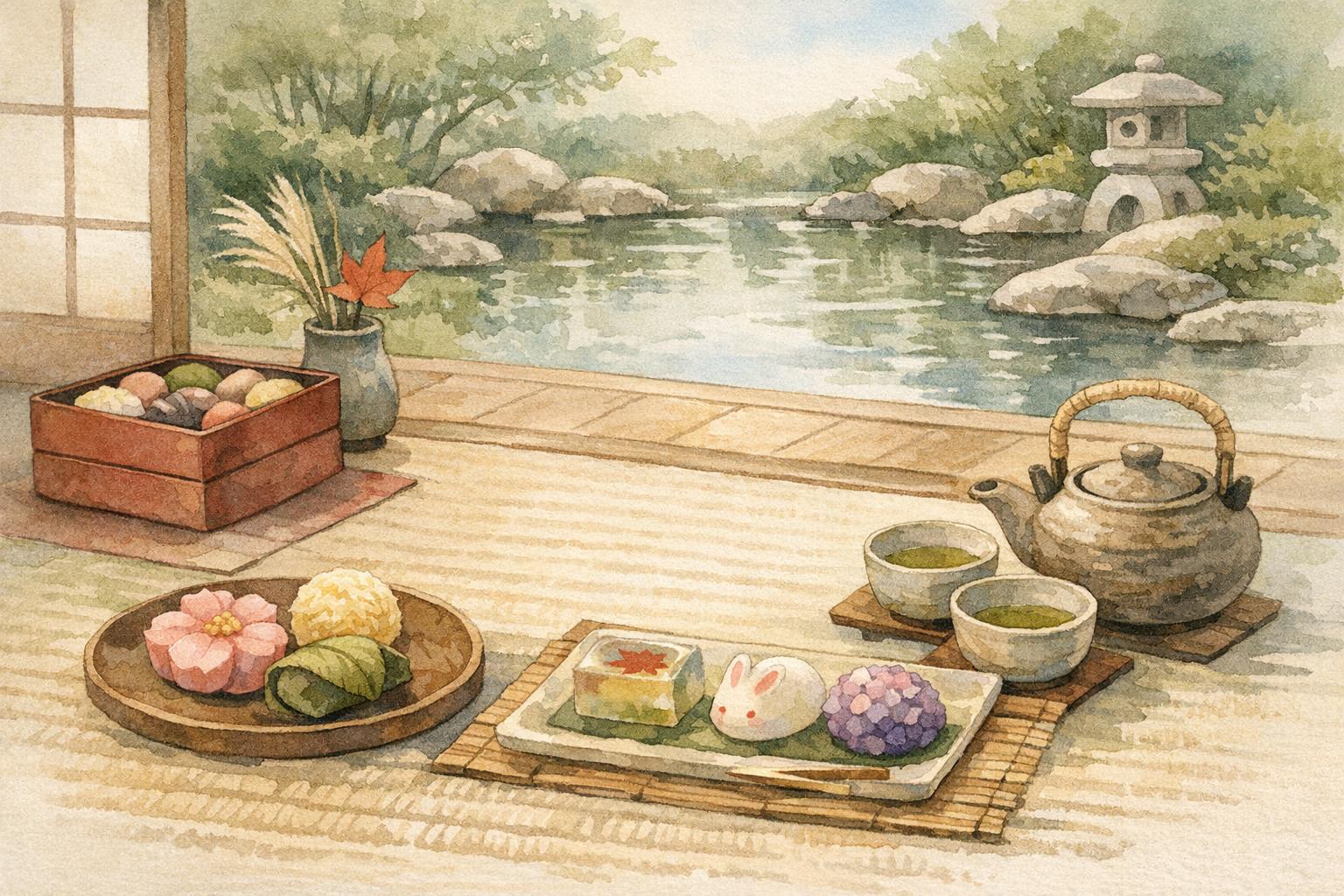
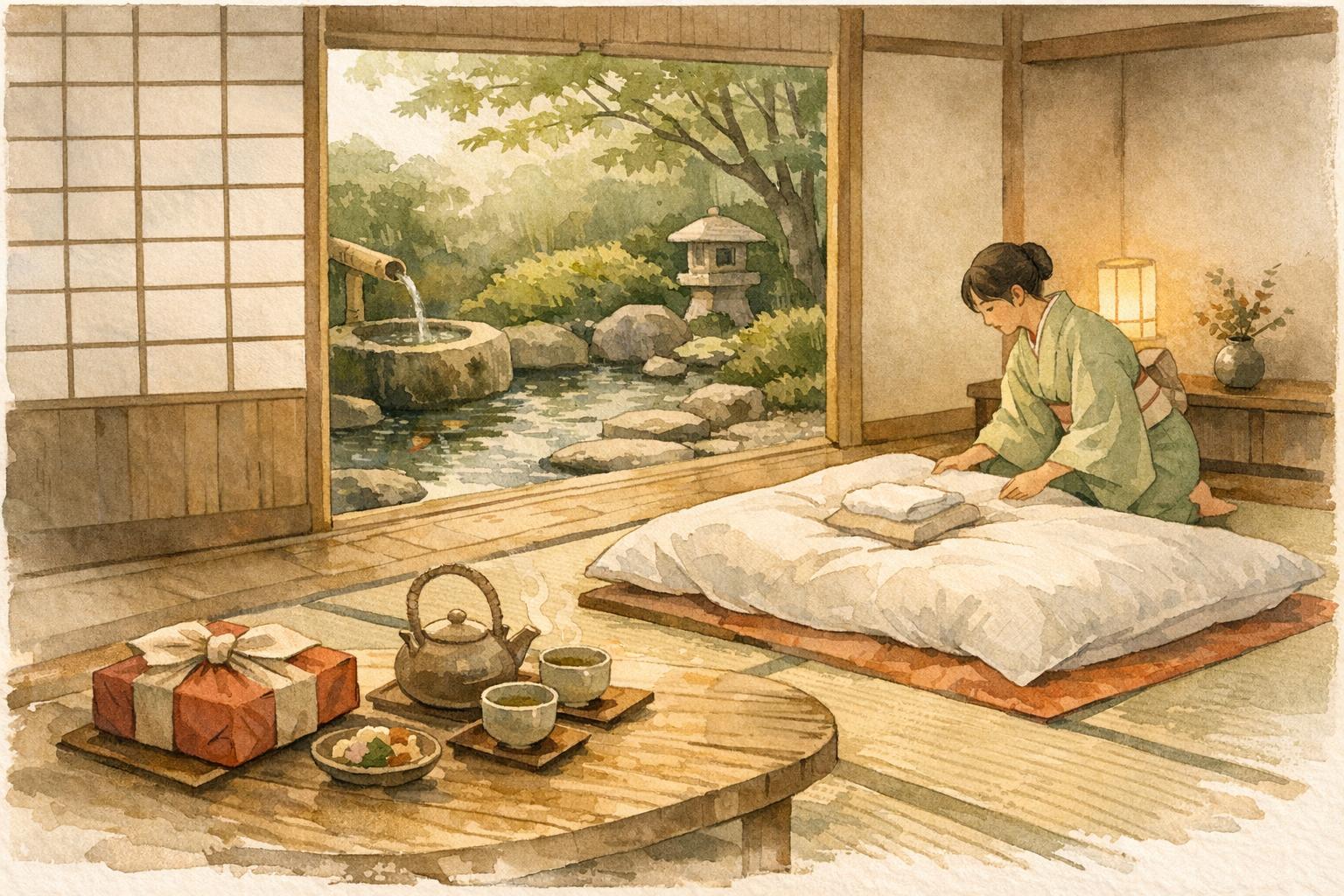
A closer look makes the pattern easier to read. Tea ceremony refines hospitality by stripping it down to a small set of highly considered actions. Utensils are chosen seasonally, sweets are timed to the tea, and even the room's emptiness contributes to the guest's experience. Because every element has been considered, care becomes visible without becoming excessive. The detail matters because it changes how the whole subject is understood.
There is also a social layer to notice. The guest is invited to notice rather than to consume passively. What looks natural usually depends on learned timing, repeated exposure, and a shared sense of what fits the situation.
Care through form
A single flower arrangement or one worn tea bowl may carry more emotional charge than a lavish display. The ceremony shows how generosity can be expressed through precision and restraint. That is often the moment when the subject stops feeling abstract and starts feeling lived.
Ritual, season, and social memory
Tea practice links utensils, season, hospitality, architecture, and silence, which is why it feels both simple and highly formal. Traditions remain meaningful when they can still organize feeling and attention, and many Japanese customs do exactly that through the calendar and family memory. This is one reason the topic tends to feel ordinary to people in Japan while seeming highly distinctive to outside observers.
The ceremony remains meaningful because it offers a disciplined way of experiencing care, material culture, and quiet social order. Continuity here does not mean the form never changes. It means newer habits often settle on top of older ways of noticing, organizing time, and sharing space.
Why it lasts
If you want to follow the same thread from another angle, see Traditional Japanese Sweets (Wagashi) Explained and The Meaning of Omotenashi: Japanese Hospitality Explained. Placed beside one another, those essays show how one part of Japanese life opens into another.
Closing Reflection
Looking closely at tea ceremony shows how small gestures can carry philosophical weight without grand explanation. The subject opens naturally onto wagashi, wabi-sabi, omotenashi, and the Japanese value placed on carefully structured quiet.
Read beside essays on cities, food, and everyday practice, the subject becomes part of a wider cultural pattern rather than a separate curiosity.
Another useful way to read this subject is to notice how often it appears without announcing itself. The Japanese tea ceremony turns ordinary acts such as pouring, folding, serving, and sitting into a concentrated form of attention. That quiet familiarity is one reason the topic can feel deeper over time instead of becoming exhausted once the basic facts are known.
It also helps to place the topic in relation to nearby subjects rather than isolating it. The essays on Traditional Japanese Sweets (Wagashi) Explained and The Meaning of Omotenashi: Japanese Hospitality Explained show how the same cultural logic travels into adjacent parts of Japanese life.
Another useful way to read this subject is to notice how often it appears without announcing itself. The Japanese tea ceremony turns ordinary acts such as pouring, folding, serving, and sitting into a concentrated form of attention. That quiet familiarity is one reason the topic can feel deeper over time instead of becoming exhausted once the basic facts are known.
It also helps to place the topic in relation to nearby subjects rather than isolating it. The essays on Traditional Japanese Sweets (Wagashi) Explained and The Meaning of Omotenashi: Japanese Hospitality Explained show how the same cultural logic travels into adjacent parts of Japanese life.