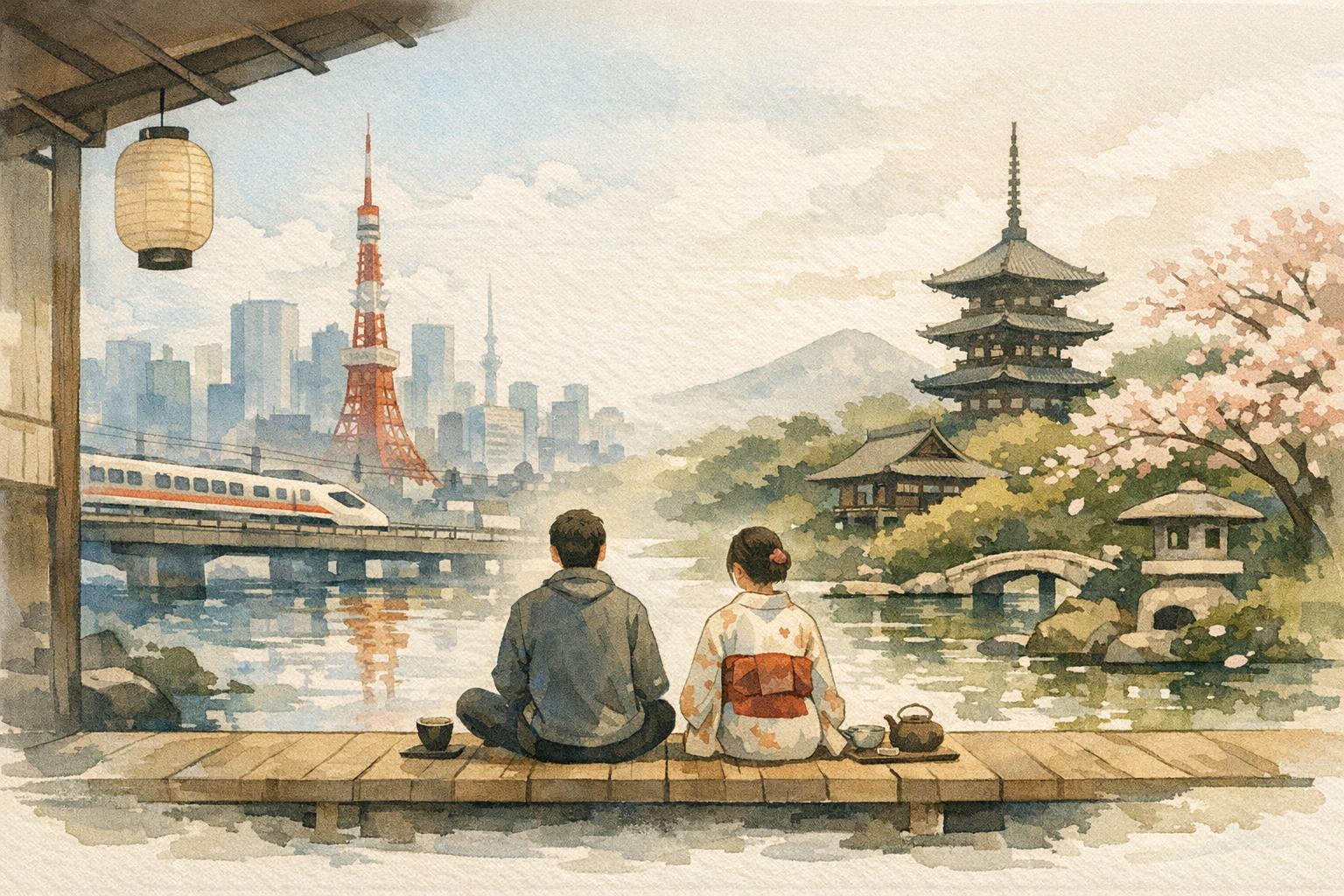
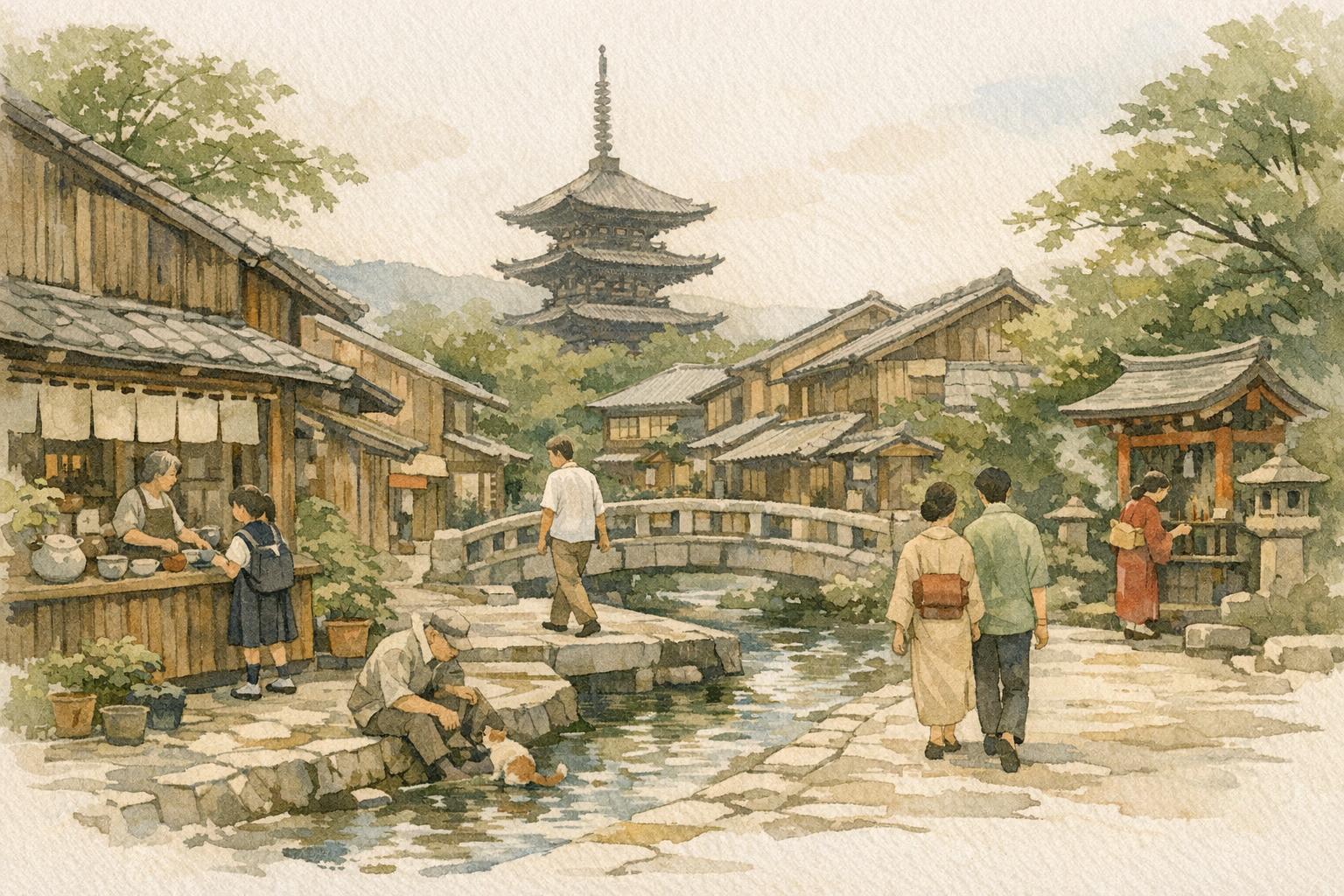
Japan is often imagined through Tokyo or Kyoto, yet much of the country's character is also shaped by smaller towns and regional cities. Comparing small-town and big-city life reveals different balances of convenience, anonymity, community memory, and daily pace. Looking closely at ordinary routines often explains more than a list of isolated facts.
In this article, the subject is treated as part of lived Japanese culture rather than as a decorative symbol. That means paying attention to timing, space, habit, and the emotional atmosphere that grows around repeated practice.
What big cities make possible
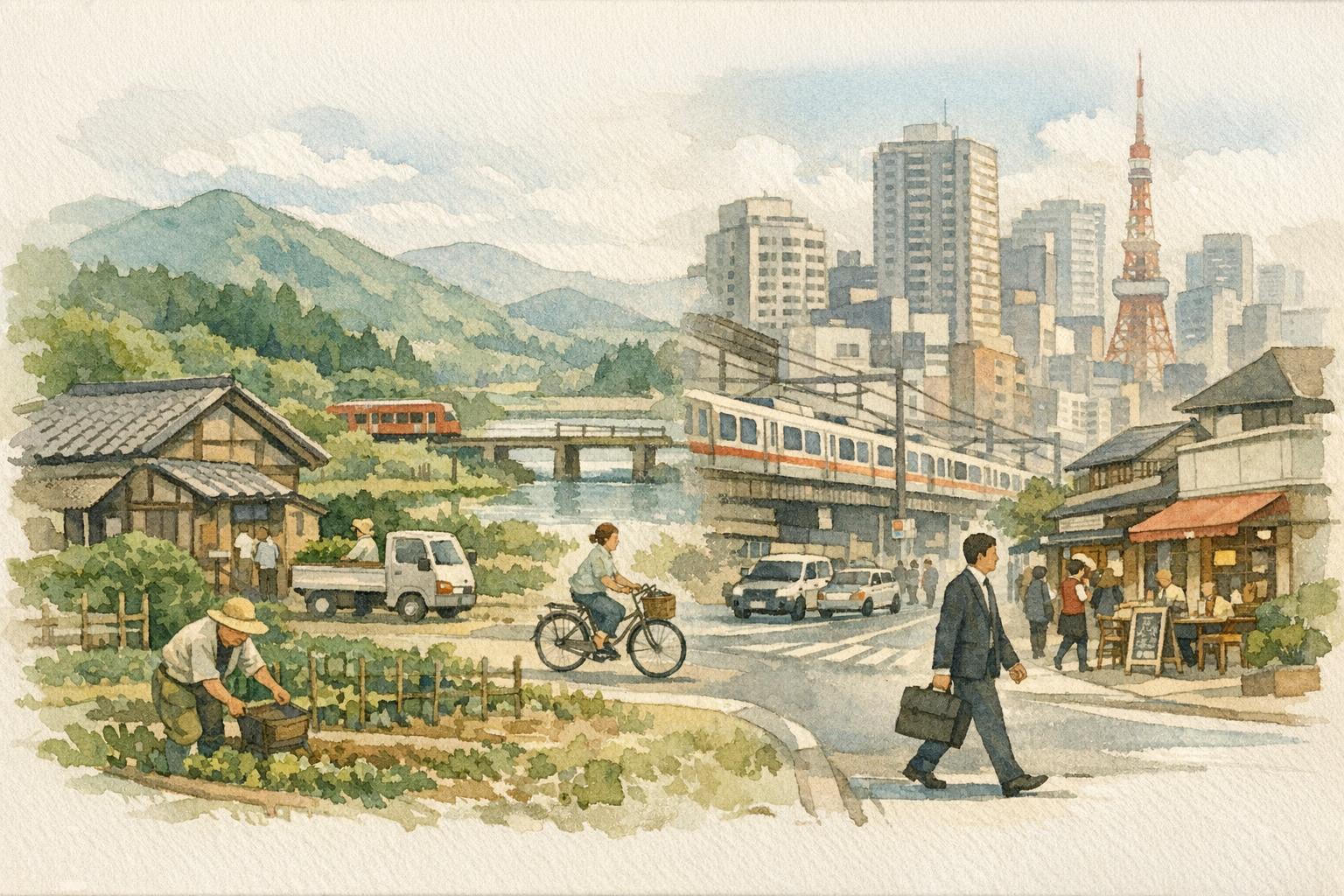
The clearest place to begin is with one practical fact. Large Japanese cities offer transport density, cultural variety, and a wider range of jobs, schools, and services within a relatively compact space. That convenience can make daily life efficient, but it also encourages faster routines and more anonymous public movement. People often gain freedom of choice while losing some of the slower familiarity of smaller communities. This is where broad stereotypes usually become too thin.
There is also a social layer to notice. Scale changes not only opportunity, but the social feel of ordinary errands and commutes. What looks natural usually depends on learned timing, repeated exposure, and a shared sense of what fits the situation.
Scale brings speed and access
A resident of Tokyo can reach specialist shops, offices, and late-night services easily, but may know little about the people living next door. Big-city life often trades intimacy for range and speed. That is often the moment when the subject stops feeling abstract and starts feeling lived.
What smaller towns preserve
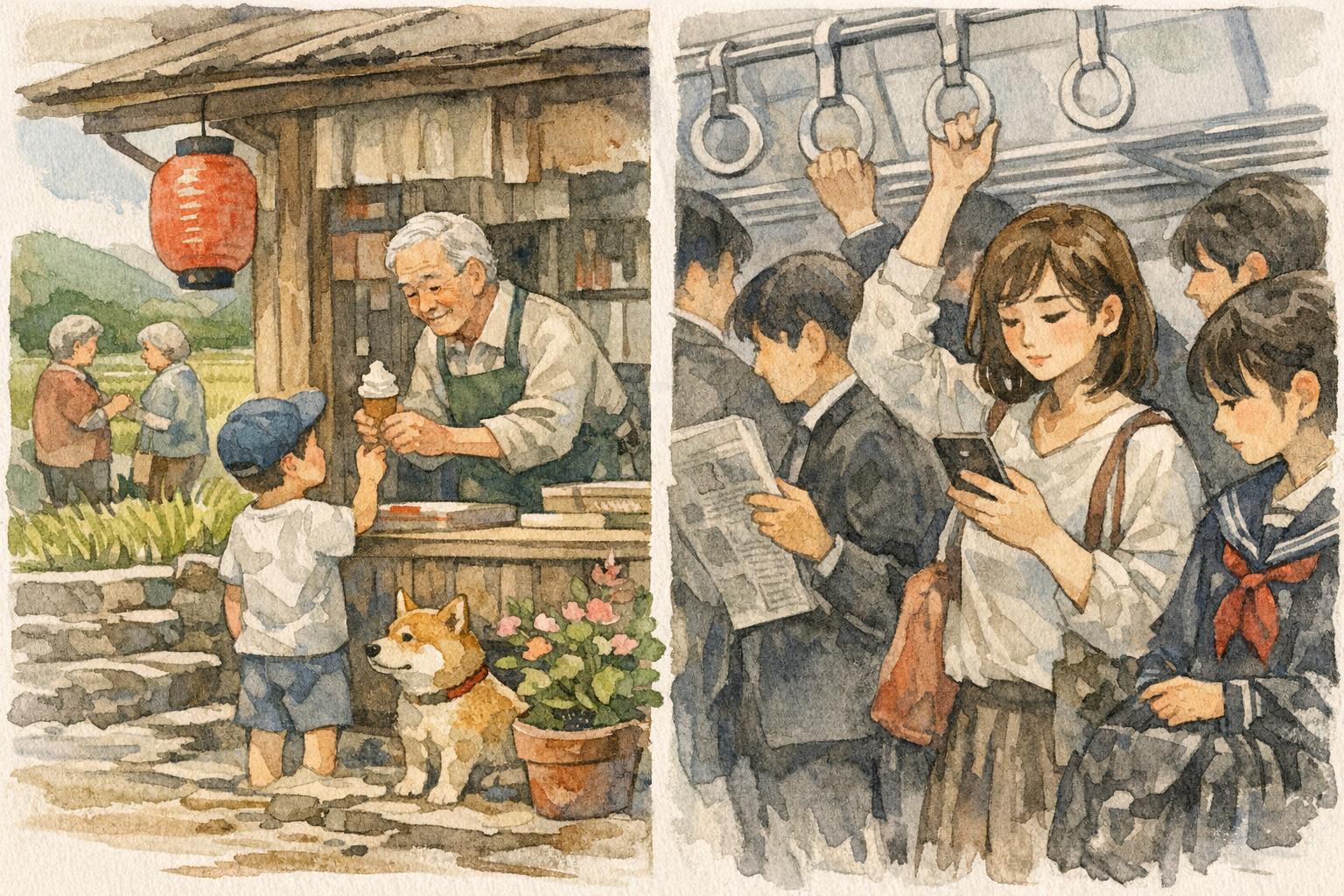
A closer look makes the pattern easier to read. In smaller Japanese towns, local memory and neighborly visibility often remain stronger because people encounter one another repeatedly in everyday settings. Shops, schools, stations, and seasonal events can feel more socially continuous than in major metropolitan districts. That continuity may feel comforting to some people and restrictive to others, depending on what they want from daily life. The detail matters because it changes how the whole subject is understood.
There is also a social layer to notice. Smaller scale makes relationships easier to notice and harder to ignore. What looks natural usually depends on learned timing, repeated exposure, and a shared sense of what fits the situation.
Community stays more visible
A local festival or school event in a smaller town can carry a stronger sense of shared recognition than the same event in a large anonymous city. Community becomes vivid when repetition happens among familiar faces. That is often the moment when the subject stops feeling abstract and starts feeling lived.
Why the contrast matters in Japan
What matters first is the lived structure beneath the surface image. Japan's national image is often urban, but the country depends on a mix of giant cities, regional hubs, and smaller communities that each teach different habits. Young people may move toward large cities for work, while older residents or families may value the steadier pace of smaller places. The contrast remains central because it shapes how people imagine both success and comfort. Seen that way, the topic moves from symbol to daily habit.
There is also a social layer to notice. Urban difference is one of the clearest ways to see how varied everyday Japan can be. What looks natural usually depends on learned timing, repeated exposure, and a shared sense of what fits the situation.
Modern life is spread across many scales
A weekend trip from Tokyo into a smaller town can feel like entering a different social tempo, not just a different scenery. Places become easier to understand when their scale is treated as part of their culture. That is often the moment when the subject stops feeling abstract and starts feeling lived.
How place shapes rhythm
Transport, housing, work options, neighborly visibility, and access to services all change noticeably with scale. Urban life in Japan is structured by transport, neighborhood identity, and subtle public expectations, so place often acts like a social teacher. This is one reason the topic tends to feel ordinary to people in Japan while seeming highly distinctive to outside observers.
The contrast matters because both forms of life continue to shape how people think about comfort, belonging, and opportunity in Japan. Continuity here does not mean the form never changes. It means newer habits often settle on top of older ways of noticing, organizing time, and sharing space.
Memory in the street
If you want to follow the same thread from another angle, see Tokyo vs Kyoto: Old vs Modern Japan and What Makes Kyoto So Special?. Placed beside one another, those essays show how one part of Japanese life opens into another.
Closing Reflection
Looking at scale closely shows that Japanese urban life is not one model, but a spectrum of different social arrangements. The subject fits naturally beside Tokyo, Kyoto, and the quieter attraction of places that many foreign visitors never see.
Read beside essays on cities, food, and everyday practice, the subject becomes part of a wider cultural pattern rather than a separate curiosity.