Outside Japan, sushi is often reduced to raw fish, but the real foundation of sushi is seasoned rice and the many ways it can be paired, shaped, and served. The variety matters because sushi reflects region, convenience, season, and craft rather than one fixed formula. Looking closely at ordinary routines often explains more than a list of isolated facts.
In this article, the subject is treated as part of lived Japanese culture rather than as a decorative symbol. That means paying attention to timing, space, habit, and the emotional atmosphere that grows around repeated practice.
The rice is the real center
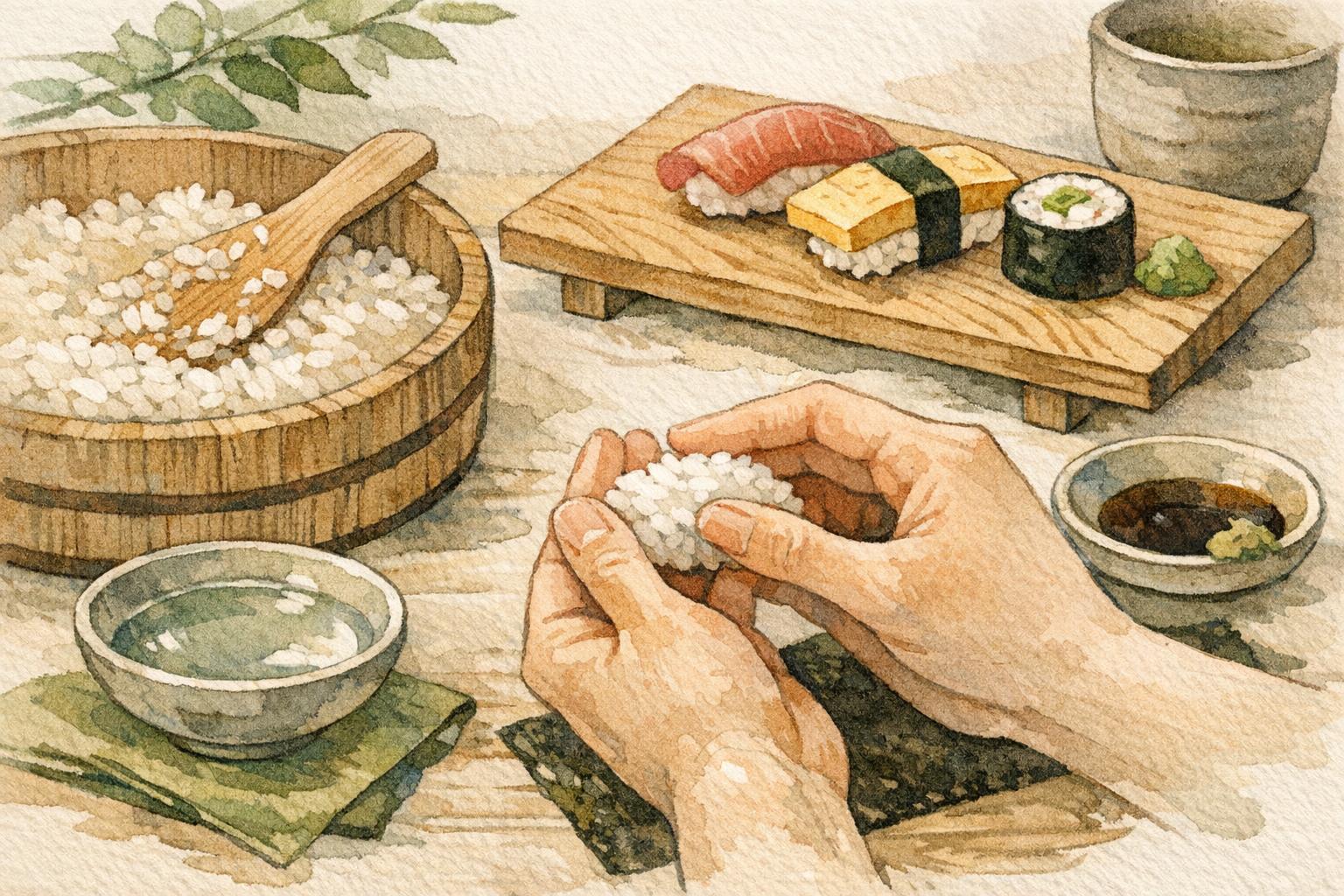
The clearest place to begin is with one practical fact. Sushi begins with seasoned rice, and that fact changes how the whole dish should be understood. Vinegar, texture, warmth, and the right degree of firmness all matter because the rice carries the structure and mood of the bite. Toppings can vary widely, but the identity of sushi depends on balance rather than on luxury alone. This is where broad stereotypes usually become too thin.
There is also a social layer to notice. This is why simple sushi can be just as revealing as expensive pieces. What looks natural usually depends on learned timing, repeated exposure, and a shared sense of what fits the situation.
Fish alone does not define sushi
Even a modest inari pocket or cucumber roll still belongs fully to sushi culture because the rice and composition remain central. The dish is best read as an arrangement of harmony, not merely as seafood service. That is often the moment when the subject stops feeling abstract and starts feeling lived.
Why there are so many forms
A closer look makes the pattern easier to read. Different sushi styles developed because people ate in different settings, moved through different regions, and needed different degrees of portability. Nigiri highlights hand skill and proportion, maki travels well, chirashi opens the form into a bowl, and pressed sushi reflects older regional habits. Each variation solves a slightly different social or practical problem while keeping the core logic intact. The detail matters because it changes how the whole subject is understood.
There is also a social layer to notice. That variety makes sushi more culturally flexible than many first imagine. What looks natural usually depends on learned timing, repeated exposure, and a shared sense of what fits the situation.
Nigiri, maki, chirashi, and more
A department-store lunch, a casual gathering, and a formal counter meal may all involve sushi, but in forms suited to their own pace and tone. The range of styles shows how tradition survives by adjusting its shape without losing its center. That is often the moment when the subject stops feeling abstract and starts feeling lived.
Beyond the stereotype of raw fish
What matters first is the lived structure beneath the surface image. Some sushi includes raw fish, but cooked egg, eel, tofu, vegetables, and pickled toppings are equally part of the story. What people are really judging is often the relationship between rice, topping, timing, and mouthfeel rather than the exotic quality of the ingredient. That is why sushi can feel refined even when its flavors are mild. Seen that way, the topic moves from symbol to daily habit.
There is also a social layer to notice. The dish rewards attention to restraint and finish rather than to excess. What looks natural usually depends on learned timing, repeated exposure, and a shared sense of what fits the situation.
Texture, restraint, and timing
A piece of tamago nigiri can say a great deal about technique because sweetness, texture, and rice balance must all settle into one small bite. Sushi becomes clearer when it is seen as a discipline of proportion. That is often the moment when the subject stops feeling abstract and starts feeling lived.
Where the table meets memory
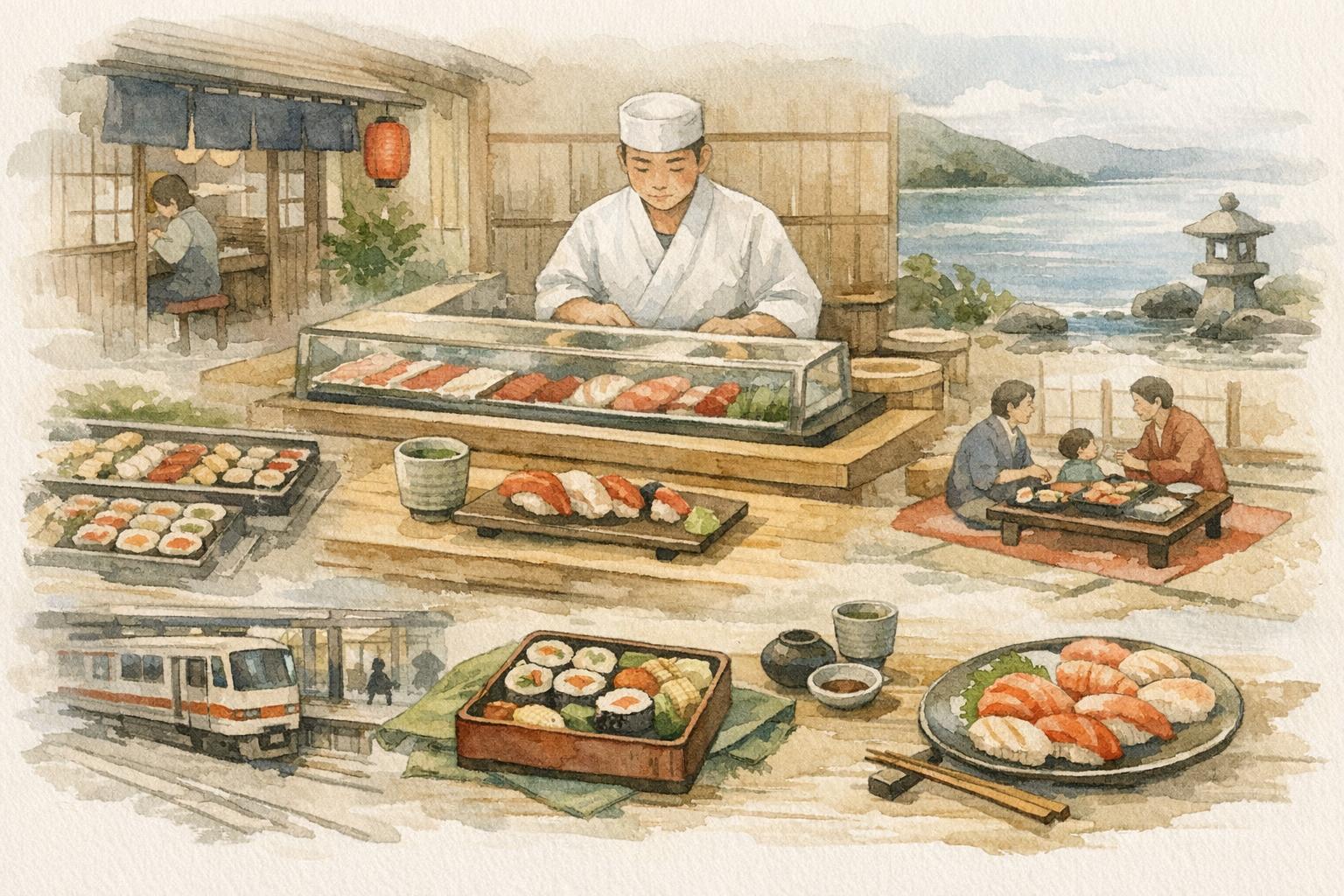
Sushi appears in formal counters, supermarkets, lunch boxes, train stations, celebrations, and neighborhood shops, which makes it both ordinary and specialized. Meals in Japan often connect convenience with formality, which is why a quick bowl, a boxed lunch, and a seasonal feast can all feel culturally dense in different ways. This is one reason the topic tends to feel ordinary to people in Japan while seeming highly distinctive to outside observers.
Its appeal lasts because the form is adaptable while still preserving a strong sense of proportion and finish. Continuity here does not mean the form never changes. It means newer habits often settle on top of older ways of noticing, organizing time, and sharing space.
Regional difference
If you want to follow the same thread from another angle, see What Makes Japanese Food So Unique? and Bento Boxes: The Art of Eating Beautifully. Placed beside one another, those essays show how one part of Japanese life opens into another.
Closing Reflection
Once the different types are clear, sushi looks less like a single dish and more like a family of forms built around balance. It connects naturally with Japanese food presentation, convenience culture, and the wider care given to seasonal ingredients.
Read beside essays on cities, food, and everyday practice, the subject becomes part of a wider cultural pattern rather than a separate curiosity.