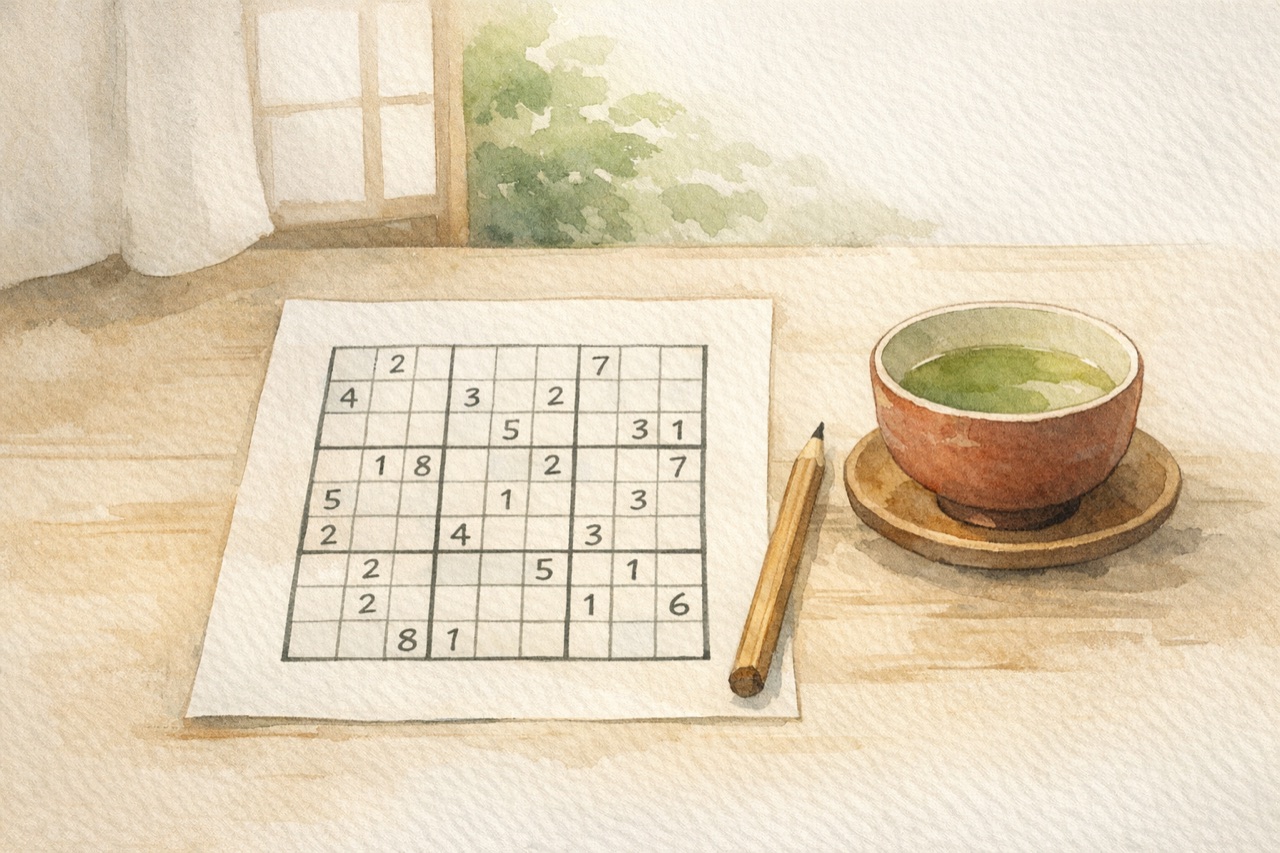
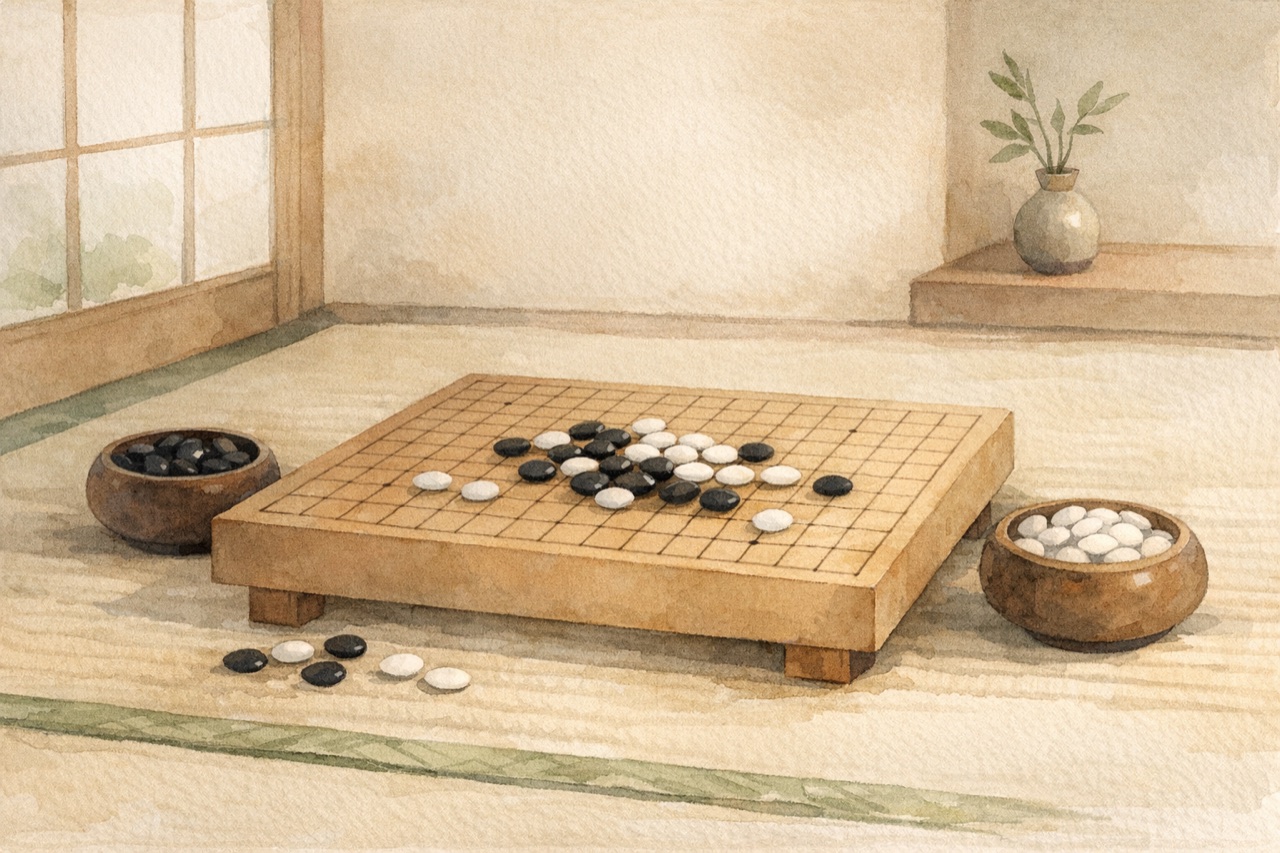
Game culture in Japan stretches from old strategy boards to bright arcades and quiet phone screens, yet these forms share surprising continuities. Taken together, they show how play in Japan often combines discipline, social space, repetition, and portable attention. Looking closely at ordinary routines often explains more than a list of isolated facts.
In this article, the subject is treated as part of lived Japanese culture rather than as a decorative symbol. That means paying attention to timing, space, habit, and the emotional atmosphere that grows around repeated practice.
Go and shogi as schools of attention
The clearest place to begin is with one practical fact. Go and shogi remain culturally important because they turn thought into something spectators can almost see unfolding in real time. Their boards are simple to look at, yet every move changes a field of possibilities that rewards patience and study. The games have also been tied to schools, clubs, ranking systems, and public commentary, which gives them educational weight beyond pastime. This is where broad stereotypes usually become too thin.
There is also a social layer to notice. Watching strong players can feel like watching concentration itself being shaped under pressure. What looks natural usually depends on learned timing, repeated exposure, and a shared sense of what fits the situation.
Visible thought on the board
Children often encounter these games as lessons in reading ahead, accepting mistakes, and respecting practice. They endure because strategy becomes a visible form of discipline. That is often the moment when the subject stops feeling abstract and starts feeling lived.
Pachinko and arcades as leisure spaces
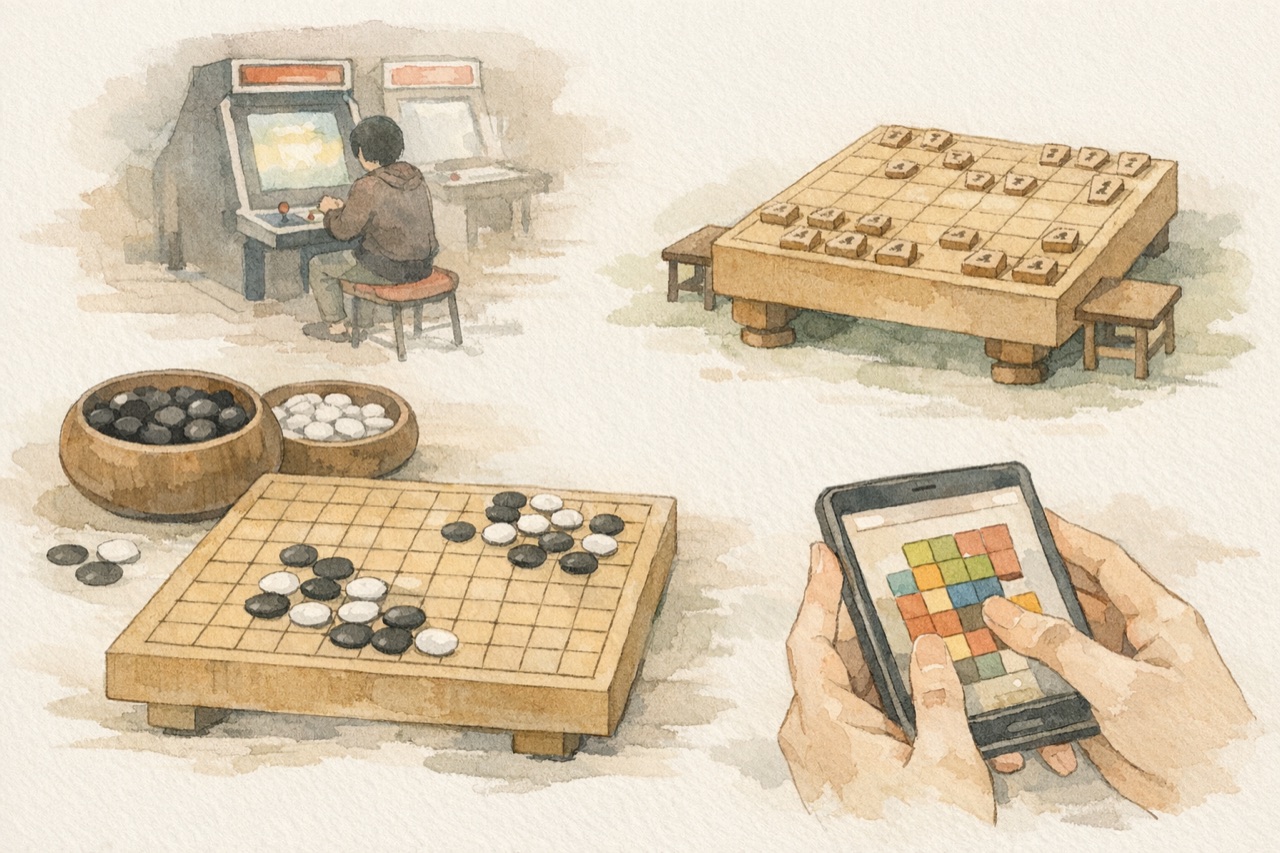
A closer look makes the pattern easier to read. Not all games in Japan are quiet; pachinko parlors and arcades show the opposite side of play as sensory immersion and urban energy. These spaces are memorable because sound, light, and machine rhythm create an atmosphere that is social even when players are individually absorbed. Arcades, in particular, became places where mastery was performed in public and where watching others was part of the attraction. The detail matters because it changes how the whole subject is understood.
There is also a social layer to notice. Pachinko occupies a more ambivalent space, mixing habit, chance, routine, and urban escapism. What looks natural usually depends on learned timing, repeated exposure, and a shared sense of what fits the situation.
Noise, light, and spectatorship
A single game center can hold rhythm games, fighting games, claw machines, and quiet spectators standing behind skilled players. Play here is inseparable from place and atmosphere. That is often the moment when the subject stops feeling abstract and starts feeling lived.
From handheld habits to phone screens
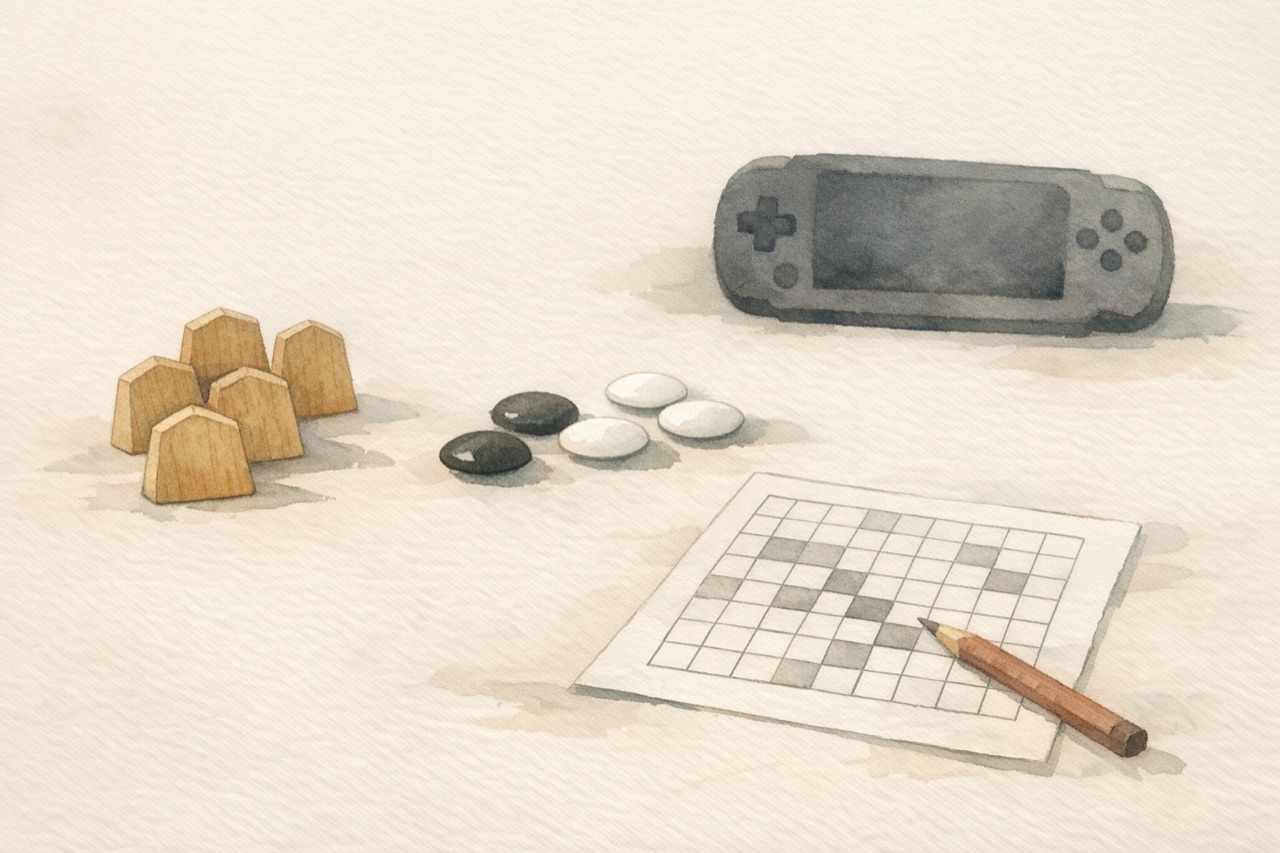
What matters first is the lived structure beneath the surface image. Modern Japanese game culture also thrives because play fits into commuting gaps, home routines, and short bursts of waiting time. Handheld systems once defined this portability, and smartphones later extended the same habit of carrying play through the day. Logic puzzles travel especially well in this environment because they offer quiet, repeatable concentration without requiring much space or sound. Seen that way, the topic moves from symbol to daily habit.
There is also a social layer to notice. For many people, sudoku is now part of that portable puzzle culture, whether on paper or on a screen. What looks natural usually depends on learned timing, repeated exposure, and a shared sense of what fits the situation.
Portable play and puzzle culture
If you want to see why the format works so well today, you can try sudoku online and immediately feel the appeal of a small, self-contained challenge. Portable games succeed in Japan because they respect both limited time and the pleasure of focused repetition. That is often the moment when the subject stops feeling abstract and starts feeling lived.
From pastime to social space
Traditional board games, noisy leisure venues, handheld habits, and logic puzzles all sit inside the same broad history of organized play. Games in Japan often live at the border between discipline and leisure, which is why they fit so naturally into homes, clubs, arcades, bookstores, and commuting time. This is one reason the topic tends to feel ordinary to people in Japan while seeming highly distinctive to outside observers.
The shift from tatami mats to train commutes did not erase older habits of concentration, rivalry, spectatorship, and patterned thinking. Continuity here does not mean the form never changes. It means newer habits often settle on top of older ways of noticing, organizing time, and sharing space.
Playing across generations
If you want to follow the same thread from another angle, see Why Sudoku Became Popular Worldwide and A Beginner's Guide to Go in Japan. Placed beside one another, those essays show how one part of Japanese life opens into another.
Closing Reflection
That is why games in Japan feel culturally dense: they are ways of learning, watching, gathering, and spending time as much as ways of winning. The hub connects naturally to separate essays on go, shogi, pachinko, mobile play, and the global rise of sudoku.
Read beside essays on cities, food, and everyday practice, the subject becomes part of a wider cultural pattern rather than a separate curiosity.