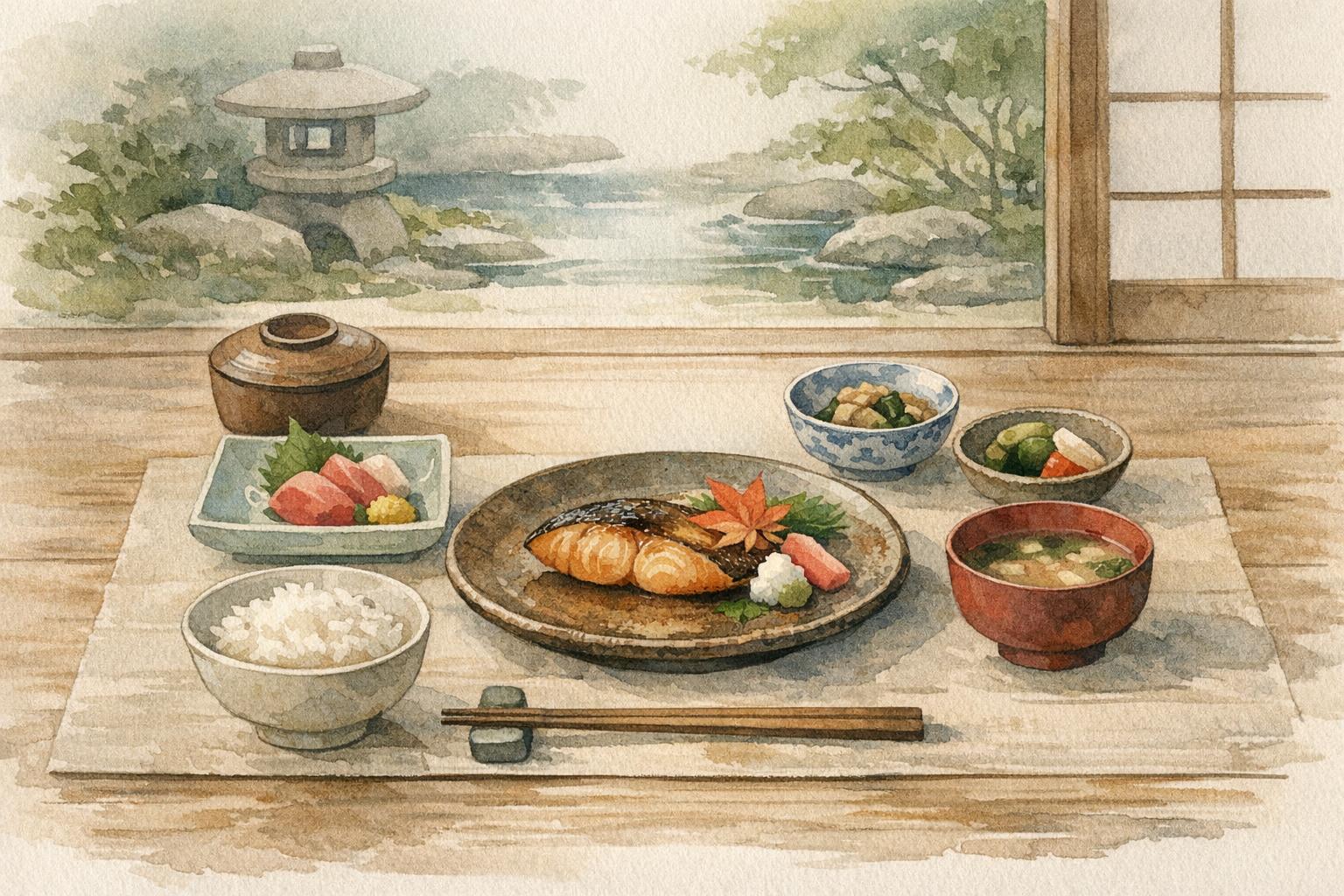
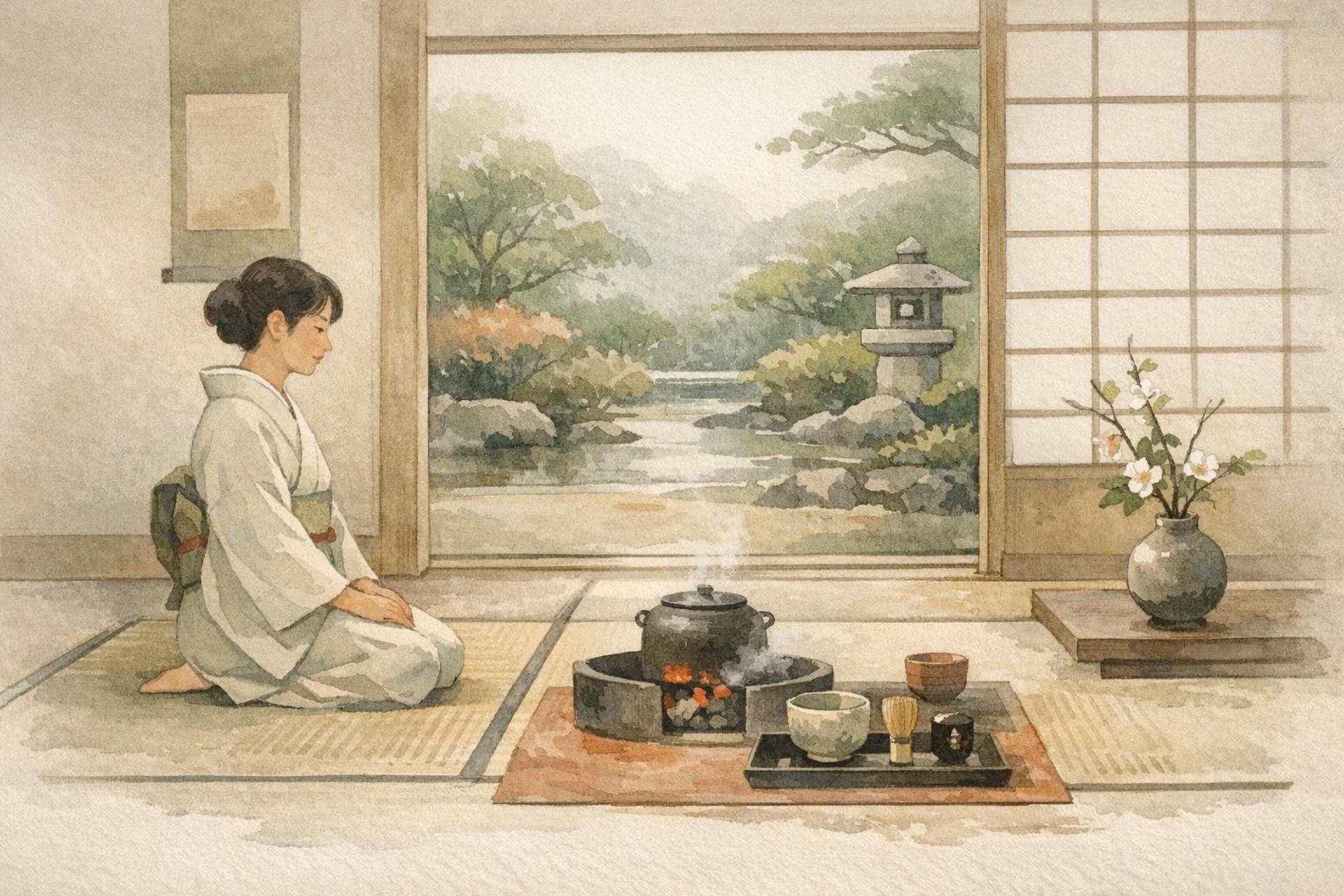
Wabi-sabi is one of the best-known Japanese ideas abroad, but in practice it points to a quiet acceptance of age, incompleteness, and irregular beauty. Seen closely, wabi-sabi is less a style label than a discipline of attention to time, fragility, and restraint. Looking closely at ordinary routines often explains more than a list of isolated facts.
In this article, the subject is treated as part of lived Japanese culture rather than as a decorative symbol. That means paying attention to timing, space, habit, and the emotional atmosphere that grows around repeated practice.
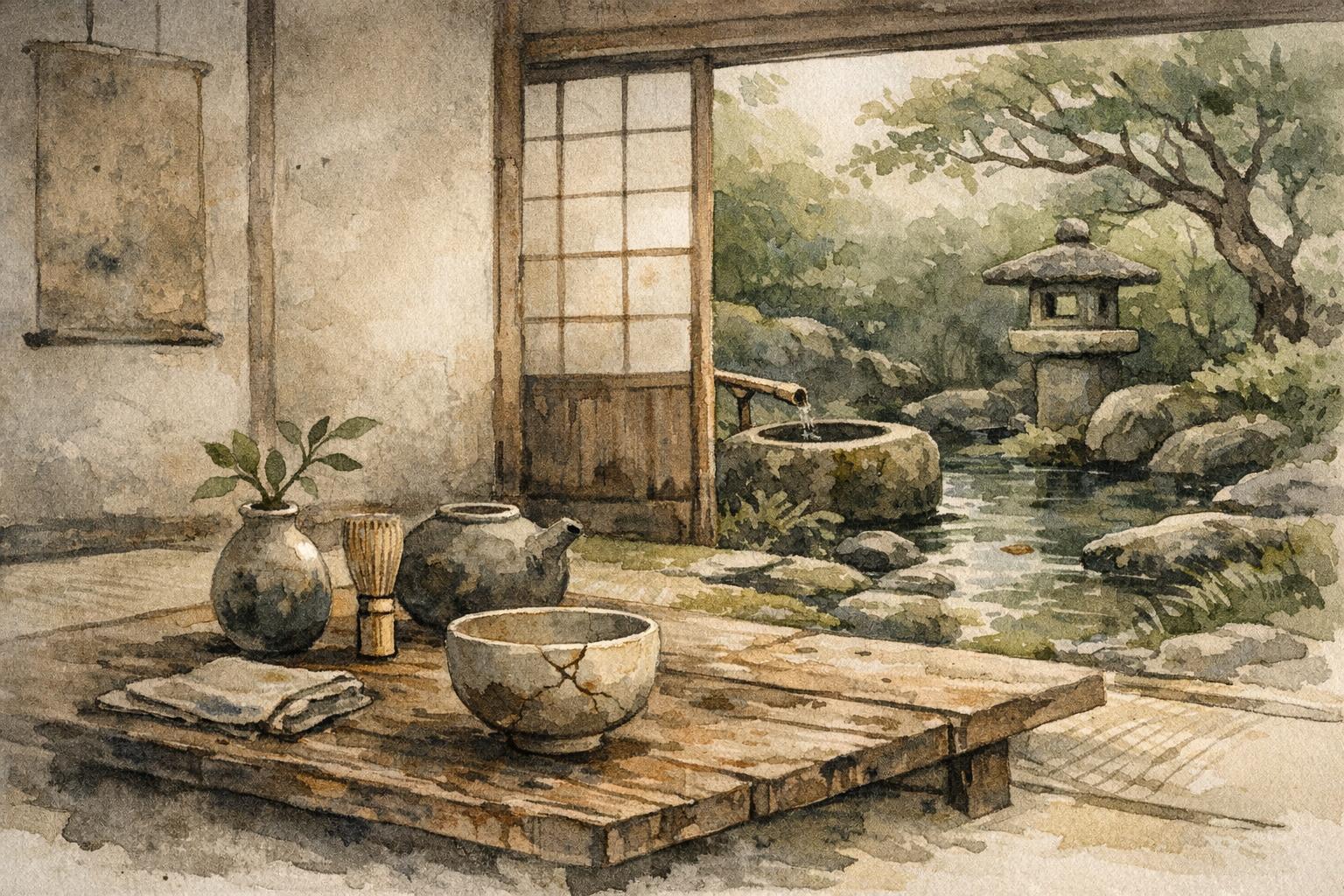
Restraint as a form of expression
The clearest place to begin is with one practical fact. Restraint often works as an active choice rather than as a lack of decoration. Paper screens, alcoves, and plain walls leave enough emptiness for one branch, one cup, or one hanging scroll to matter. The eye is guided by balance and interval, so silence in a room can feel as designed as the furniture inside it. This is where broad stereotypes usually become too thin.
There is also a social layer to notice. Materials such as cedar, clay, cotton, and handmade paper are appreciated because they age visibly instead of hiding time. What looks natural usually depends on learned timing, repeated exposure, and a shared sense of what fits the situation.
Space that lets the eye rest
In a traditional room, changing a single seasonal object can alter the atmosphere without changing the layout at all. That is why modest composition often feels expressive in Japan: attention completes the design. That is often the moment when the subject stops feeling abstract and starts feeling lived.
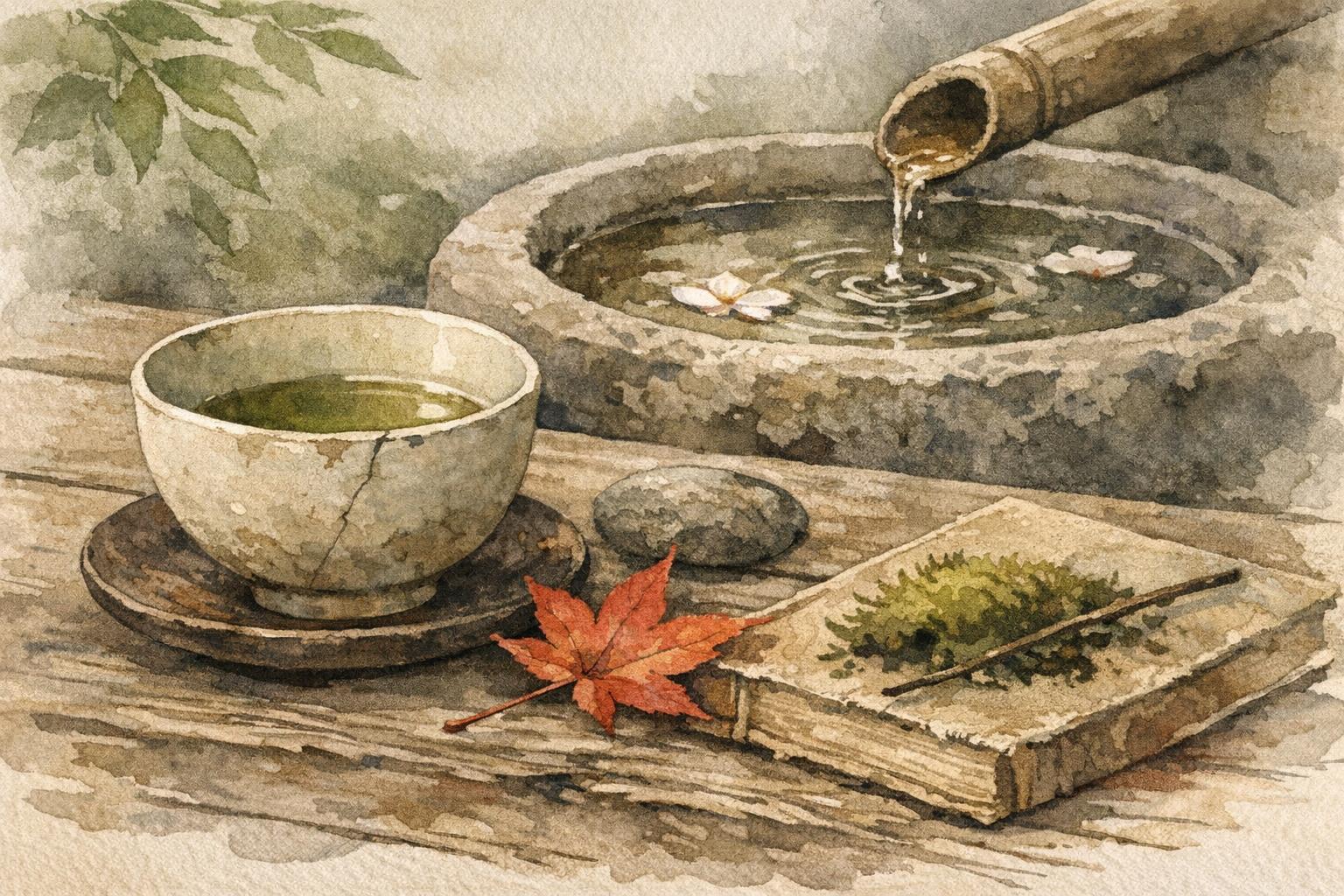
Season in the smallest details
A closer look makes the pattern easier to read. Seasonal feeling enters aesthetics through tiny adjustments rather than through dramatic transformation. A summer wind chime, a cooler ceramic cup, or a warmer woven cloth can shift the emotional temperature of a space. Packaging, sweets, and shop displays often echo blossoms, rain, insects, moonlight, or leaves in ways that feel brief on purpose. The detail matters because it changes how the whole subject is understood.
There is also a social layer to notice. This brevity matters because beauty is linked to passing time, not to the fantasy of keeping one perfect moment forever. What looks natural usually depends on learned timing, repeated exposure, and a shared sense of what fits the situation.
A calendar of textures
Even a convenience-store dessert can signal the season through color, ingredient choice, and the mood of its wrapper. Japanese aesthetics become easier to read when change itself is treated as part of the form. That is often the moment when the subject stops feeling abstract and starts feeling lived.
How the idea travels through daily life
It appears in ceramics, interiors, gardens, tea rooms, and ordinary objects, so it belongs to lived culture rather than to theory alone. Much of Japanese culture becomes visible through repetition rather than through declaration, so small gestures often carry more meaning than formal explanation. This is one reason the topic tends to feel ordinary to people in Japan while seeming highly distinctive to outside observers.
The idea remains meaningful because it helps people read weathering, emptiness, and softness as forms of character rather than as defects. Continuity here does not mean the form never changes. It means newer habits often settle on top of older ways of noticing, organizing time, and sharing space.
Quiet repetition
If you want to follow the same thread from another angle, see Why Japanese Food Presentation Matters So Much and Japanese Tea Ceremony: Meaning Behind Every Move. Placed beside one another, those essays show how one part of Japanese life opens into another.
Closing Reflection
That perspective changes what counts as beautiful, because a mark of age or a rough edge can deepen an object instead of diminishing it. It connects naturally with traditional homes, Japanese gardens, and the value placed on silence and pause.
Read beside essays on cities, food, and everyday practice, the subject becomes part of a wider cultural pattern rather than a separate curiosity.
Another useful way to read this subject is to notice how often it appears without announcing itself. Wabi-sabi is one of the best-known Japanese ideas abroad, but in practice it points to a quiet acceptance of age, incompleteness, and irregular beauty. That quiet familiarity is one reason the topic can feel deeper over time instead of becoming exhausted once the basic facts are known.
It also helps to place the topic in relation to nearby subjects rather than isolating it. The essays on Why Japanese Food Presentation Matters So Much and Japanese Tea Ceremony: Meaning Behind Every Move show how the same cultural logic travels into adjacent parts of Japanese life.
Another useful way to read this subject is to notice how often it appears without announcing itself. Wabi-sabi is one of the best-known Japanese ideas abroad, but in practice it points to a quiet acceptance of age, incompleteness, and irregular beauty. That quiet familiarity is one reason the topic can feel deeper over time instead of becoming exhausted once the basic facts are known.