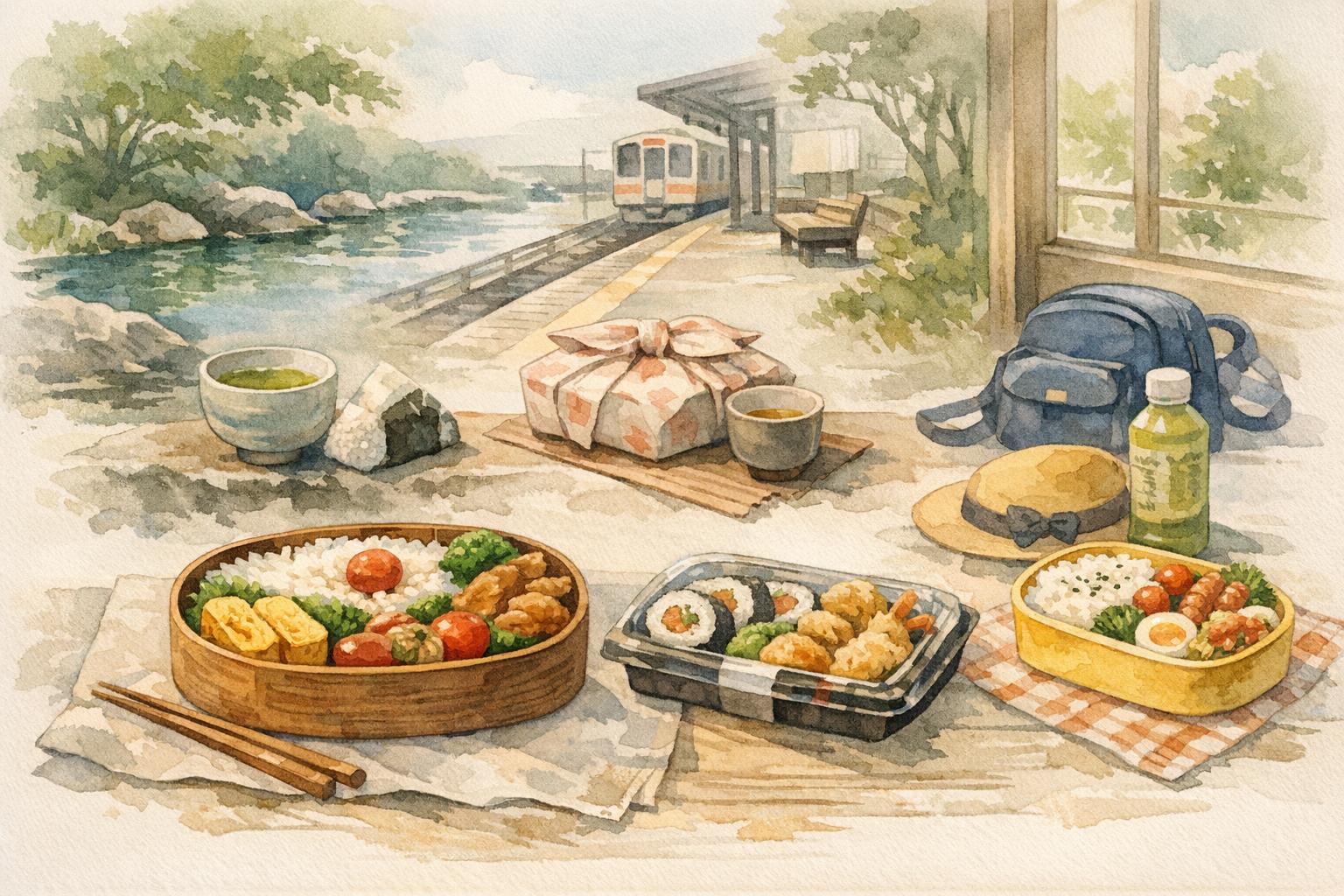
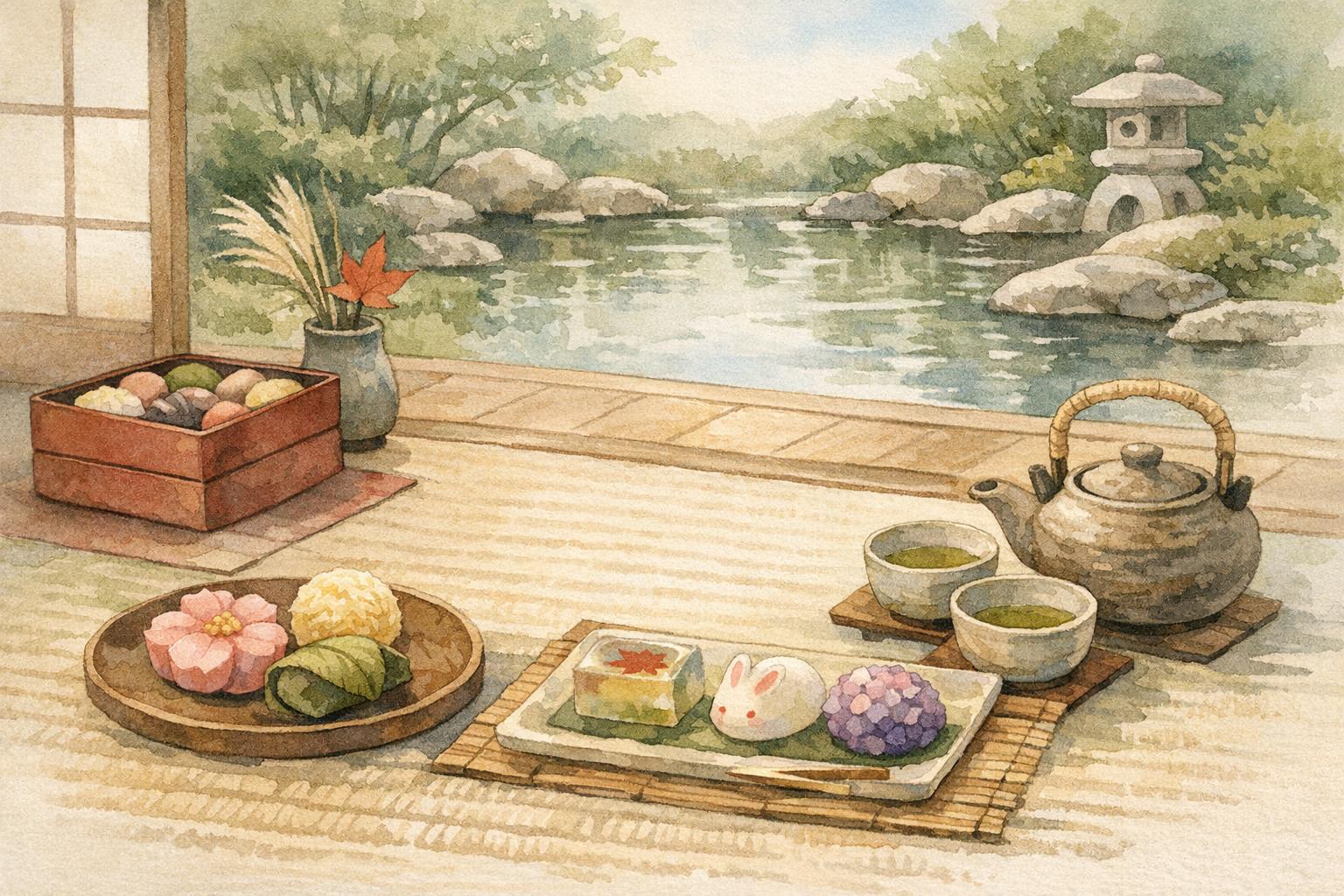
Japanese food is often described through famous dishes, but what makes it distinctive is the combination of seasonality, balance, texture, presentation, and routine. Its character comes less from one ingredient than from the way meals are arranged, noticed, and shared. Looking closely at ordinary routines often explains more than a list of isolated facts.
In this article, the subject is treated as part of lived Japanese culture rather than as a decorative symbol. That means paying attention to timing, space, habit, and the emotional atmosphere that grows around repeated practice.
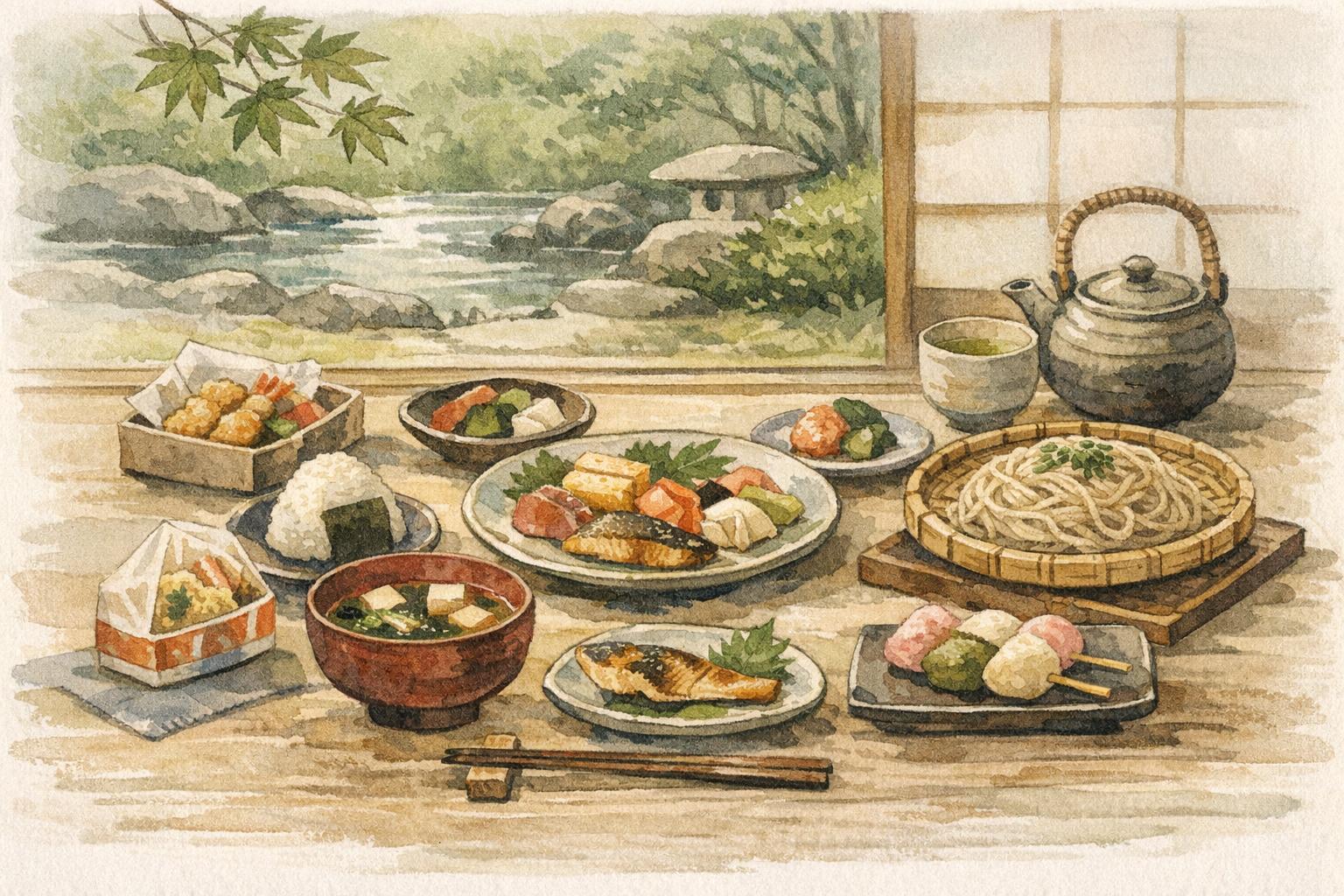
Rice as the meal's center of gravity
The clearest place to begin is with one practical fact. Many Japanese meals are built around the expectation that rice will balance salt, broth, pickles, and stronger side dishes. Its plainness is useful because it absorbs contrast and gives the rest of the table a stable middle. This is why rice can feel satisfying without demanding attention in the way a strongly seasoned main dish might. This is where broad stereotypes usually become too thin.
There is also a social layer to notice. The meal is not finished by volume alone but by the sense that the flavors have settled around a familiar base. What looks natural usually depends on learned timing, repeated exposure, and a shared sense of what fits the situation.
A quiet organizer
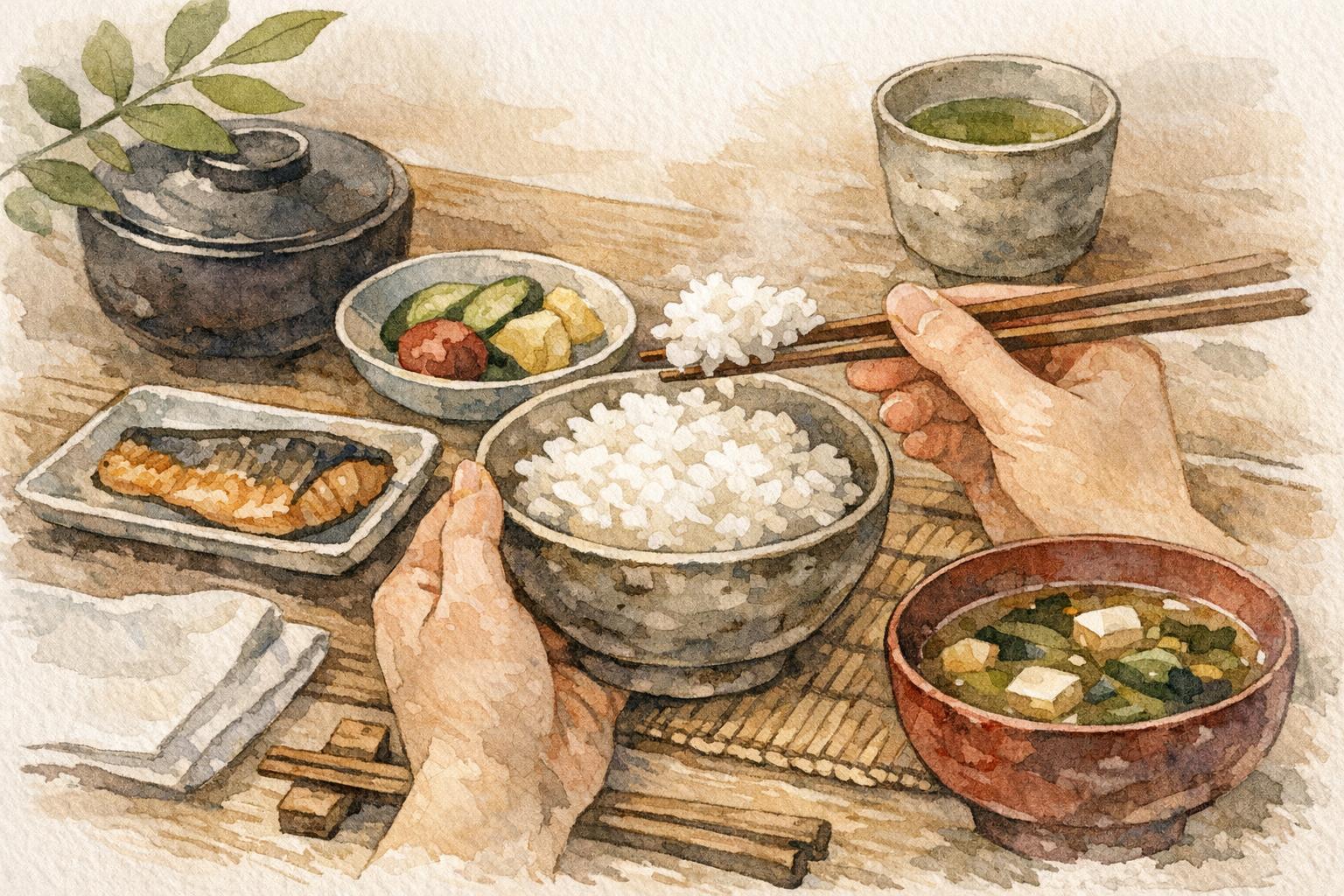
Even a small bowl beside grilled fish and miso soup can make breakfast feel complete. Rice anchors the meal by creating proportion rather than by dominating taste. That is often the moment when the subject stops feeling abstract and starts feeling lived.
Memory inside a staple
A closer look makes the pattern easier to read. Rice carries emotional weight because it appears in so many formative and ceremonial contexts. School lunches, family dinners, harvest imagery, and shrine offerings all reinforce the grain's presence in daily and sacred life. Language itself remembers this importance through terms that tie cooked rice to the broader idea of a meal. The detail matters because it changes how the whole subject is understood.
There is also a social layer to notice. Modern eating habits may diversify, yet rice often remains the food that feels most reassuring after travel, illness, or exhaustion. What looks natural usually depends on learned timing, repeated exposure, and a shared sense of what fits the situation.
Home, school, and ritual
A simple rice ball can suggest convenience, childhood, and care all at once. The grain lasts culturally because it holds both nutrition and belonging. That is often the moment when the subject stops feeling abstract and starts feeling lived.
Where the table meets memory
Rice, soup, pickles, noodles, sweets, convenience food, and regional specialties all belong to the same larger logic of timing and composition. Meals in Japan often connect convenience with formality, which is why a quick bowl, a boxed lunch, and a seasonal feast can all feel culturally dense in different ways. This is one reason the topic tends to feel ordinary to people in Japan while seeming highly distinctive to outside observers.
That logic stays strong because Japanese meals often join practicality with ceremony even in ordinary settings. Continuity here does not mean the form never changes. It means newer habits often settle on top of older ways of noticing, organizing time, and sharing space.
Regional difference
If you want to follow the same thread from another angle, see Bento Boxes: The Art of Eating Beautifully and Traditional Japanese Sweets (Wagashi) Explained. Placed beside one another, those essays show how one part of Japanese life opens into another.
Closing Reflection
Looking closely at Japanese food means seeing not only flavor, but also rhythm, texture, color, and social meaning. The subject opens naturally onto ramen, wagashi, bento, and the careful role of presentation at the table.
Read beside essays on cities, food, and everyday practice, the subject becomes part of a wider cultural pattern rather than a separate curiosity.
Another useful way to read this subject is to notice how often it appears without announcing itself. Japanese food is often described through famous dishes, but what makes it distinctive is the combination of seasonality, balance, texture, presentation, and routine. That quiet familiarity is one reason the topic can feel deeper over time instead of becoming exhausted once the basic facts are known.
It also helps to place the topic in relation to nearby subjects rather than isolating it. The essays on Bento Boxes: The Art of Eating Beautifully and Traditional Japanese Sweets (Wagashi) Explained show how the same cultural logic travels into adjacent parts of Japanese life.
Another useful way to read this subject is to notice how often it appears without announcing itself. Japanese food is often described through famous dishes, but what makes it distinctive is the combination of seasonality, balance, texture, presentation, and routine. That quiet familiarity is one reason the topic can feel deeper over time instead of becoming exhausted once the basic facts are known.