Bowing in Japan is not only a formal custom; it is a practical language of greeting, respect, apology, and social awareness. The gesture lasts because it communicates nuance without requiring touch, noise, or long explanation. Looking closely at ordinary routines often explains more than a list of isolated facts.
In this article, the subject is treated as part of lived Japanese culture rather than as a decorative symbol. That means paying attention to timing, space, habit, and the emotional atmosphere that grows around repeated practice.
A gesture with many shades of meaning
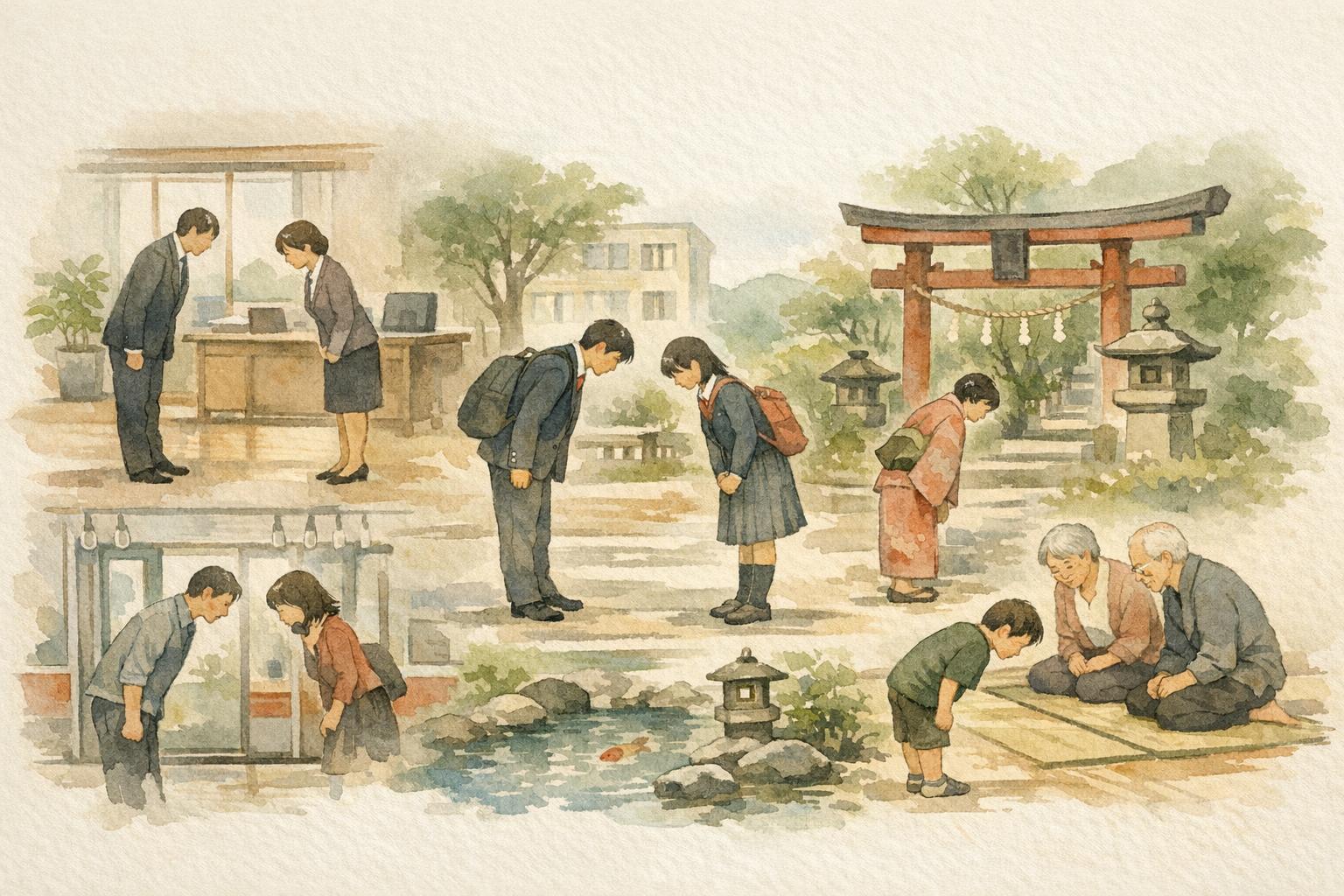
The clearest place to begin is with one practical fact. Bowing matters because the same movement can express greeting, gratitude, apology, and respect with different depth and timing. A small nod between neighbors is not the same as a deeper bow in a formal workplace or ceremonial setting. Because the body angle can change, the gesture carries information that a simple spoken greeting often cannot hold. This is where broad stereotypes usually become too thin.
There is also a social layer to notice. That precision helps people acknowledge one another while still preserving appropriate distance. What looks natural usually depends on learned timing, repeated exposure, and a shared sense of what fits the situation.
Greeting without intrusion
A shop worker at the door, a student greeting a teacher, and a traveler thanking station staff may all bow differently in recognizably distinct ways. The form survives because it is flexible enough for daily life and expressive enough for formal occasions. That is often the moment when the subject stops feeling abstract and starts feeling lived.
Why bowing feels natural in Japan
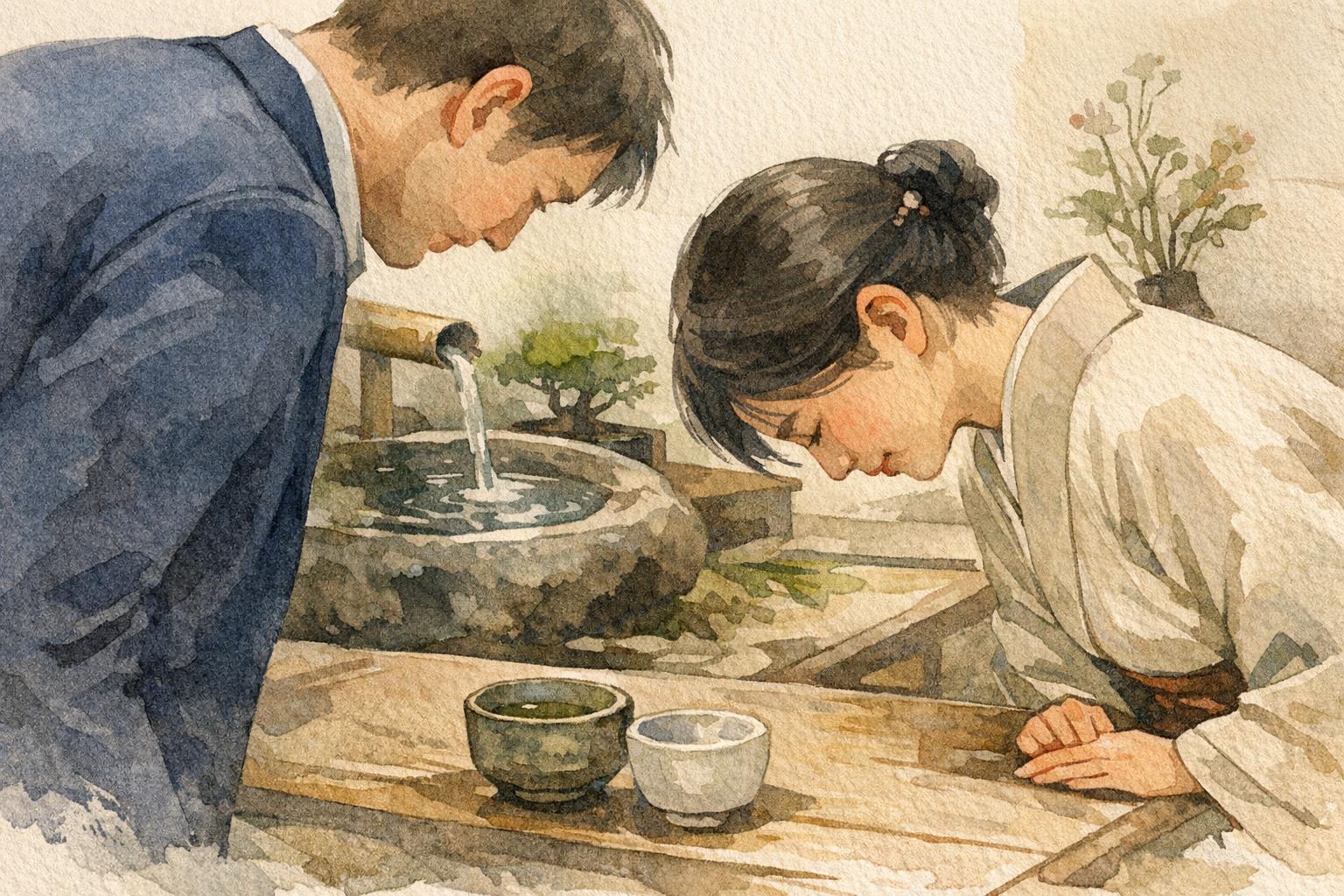
A closer look makes the pattern easier to read. A handshake assumes touch, but bowing allows contact to be replaced by visible consideration. That matters in a culture where personal space, hierarchy, and the emotional tone of an encounter are carefully noticed. The body speaks briefly, and then the interaction can continue without unnecessary emphasis. The detail matters because it changes how the whole subject is understood.
There is also a social layer to notice. In crowded public life, that economy often feels more practical than a custom that requires stepping forward and taking someone by the hand. What looks natural usually depends on learned timing, repeated exposure, and a shared sense of what fits the situation.
Distance can also be respectful
On a busy workday, bowing can acknowledge another person fully without interrupting the flow of a corridor, station, or office. The custom fits a society that values smoothness, timing, and minimal friction in shared spaces. That is often the moment when the subject stops feeling abstract and starts feeling lived.
A custom that changes but does not vanish
What matters first is the lived structure beneath the surface image. Japanese people do shake hands in some international or business situations, but bowing still frames the interaction. The older gesture often comes first, or quietly accompanies the newer one, because it still feels culturally precise. What changes is not the meaning of the bow so much as the range of situations in which people combine customs. Seen that way, the topic moves from symbol to daily habit.
There is also a social layer to notice. That flexibility helps the practice remain current rather than purely ceremonial. What looks natural usually depends on learned timing, repeated exposure, and a shared sense of what fits the situation.
Global contact has not erased it
A meeting with overseas guests may include smiles and handshakes, yet many participants will still bow at the start or end almost automatically. The custom remains alive because it can adapt without losing its inner logic. That is often the moment when the subject stops feeling abstract and starts feeling lived.
How the idea travels through daily life
People bow in shops, offices, schools, trains, shrines, and family settings, so the practice belongs to ordinary rhythm as much as to etiquette. Much of Japanese culture becomes visible through repetition rather than through declaration, so small gestures often carry more meaning than formal explanation. This is one reason the topic tends to feel ordinary to people in Japan while seeming highly distinctive to outside observers.
Even where handshakes are used in international settings, bowing still carries the finer shades of distance, humility, and situational awareness. Continuity here does not mean the form never changes. It means newer habits often settle on top of older ways of noticing, organizing time, and sharing space.
Quiet repetition
If you want to follow the same thread from another angle, see The Meaning of Omotenashi: Japanese Hospitality Explained and Why Silence Is Valued in Japanese Culture. Placed beside one another, those essays show how one part of Japanese life opens into another.
Closing Reflection
Looking at bowing closely shows how much Japanese social life depends on small visible signals of attention. It sits close to omotenashi, quiet speech, and the cultural value placed on reading the room.
Read beside essays on cities, food, and everyday practice, the subject becomes part of a wider cultural pattern rather than a separate curiosity.