Japanese homes are often small because land, urban density, cost, and household habits all push toward compact living. What makes them notable is not just size, but the ingenuity with which small spaces are made flexible and livable. Looking closely at ordinary routines often explains more than a list of isolated facts.
In this article, the subject is treated as part of lived Japanese culture rather than as a decorative symbol. That means paying attention to timing, space, habit, and the emotional atmosphere that grows around repeated practice.
Rooms that change function
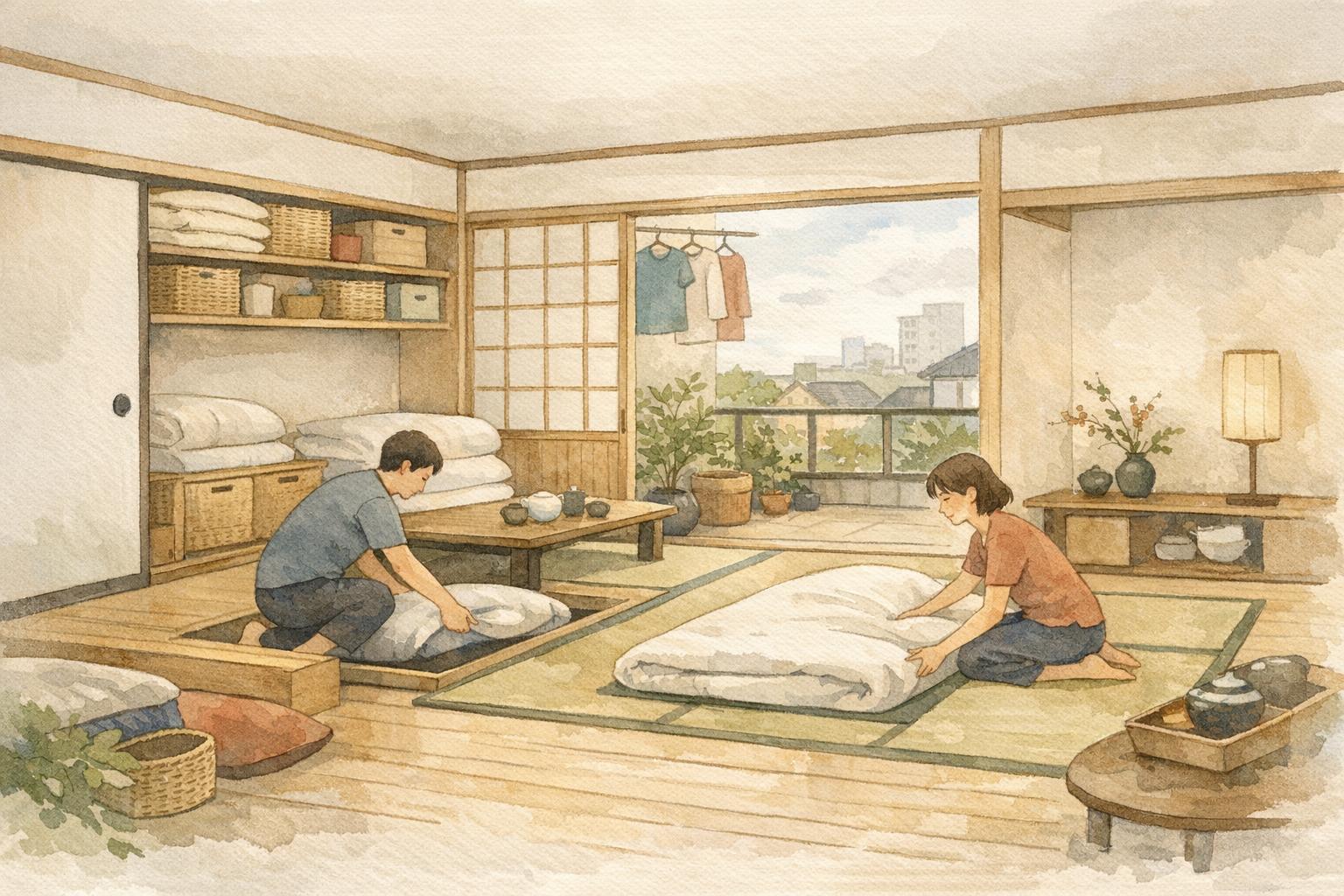
The clearest place to begin is with one practical fact. Many Japanese homes are designed or used in ways that let one room support several purposes across the day. Bedding is stored away, low tables can be moved, and floor space is protected so that eating, studying, and resting can happen sequentially. This makes the room feel more alive because use is tied to time rather than locked into permanent arrangement. This is where broad stereotypes usually become too thin.
There is also a social layer to notice. Compact space rewards habits that reduce clutter and keep transitions smooth. What looks natural usually depends on learned timing, repeated exposure, and a shared sense of what fits the situation.
Flexibility over fixed identity
A single room can hold family meals in the evening and sleeping space at night without feeling contradictory. Flexibility turns limited area into a kind of practical abundance. That is often the moment when the subject stops feeling abstract and starts feeling lived.
Order as domestic comfort
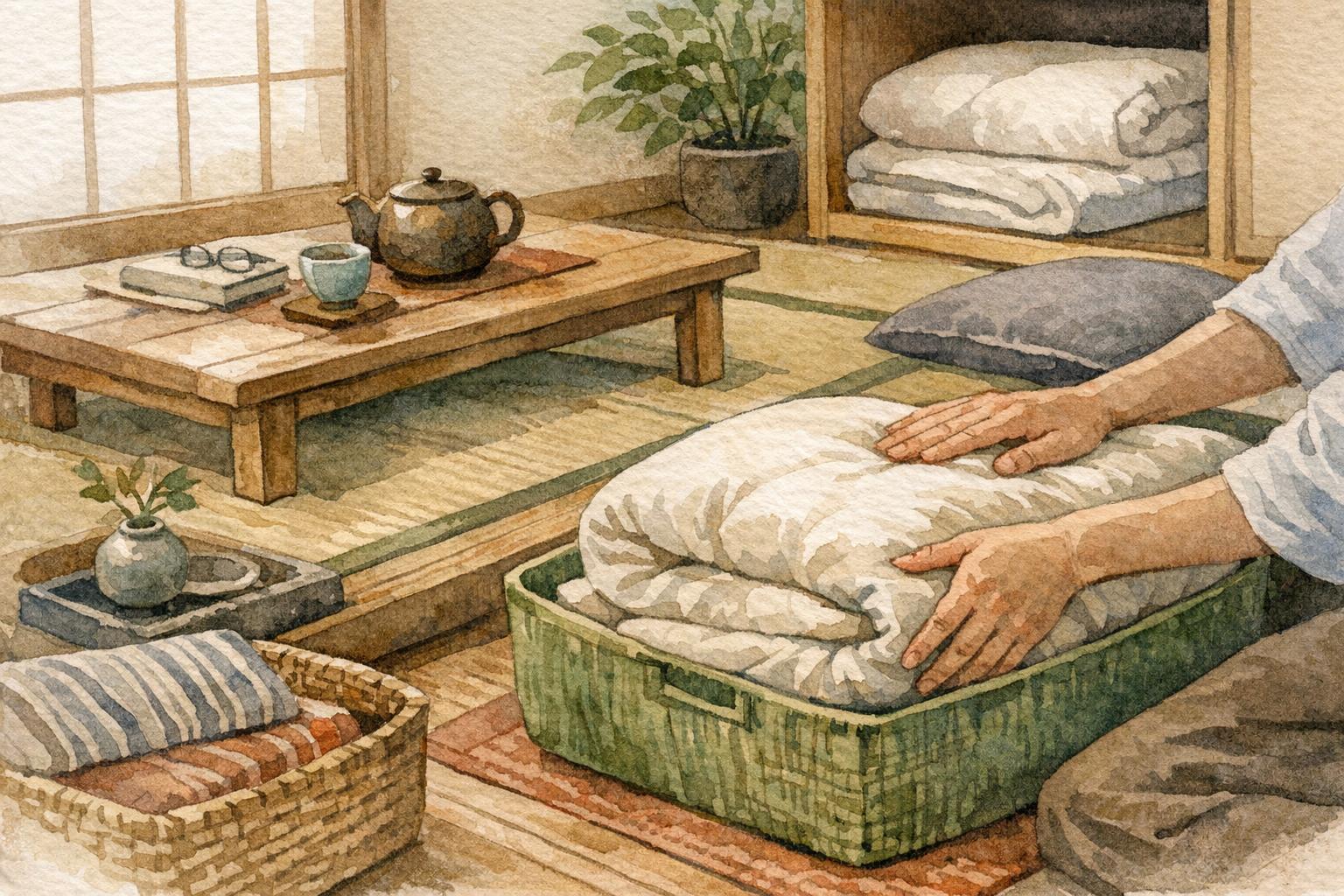
A closer look makes the pattern easier to read. In small homes, comfort depends heavily on keeping objects legible and surfaces relatively clear. Good storage is not only a technical solution but part of emotional ease, because visible clutter quickly changes the feeling of a compact room. This is one reason restrained decoration can feel natural in Japanese interiors. The detail matters because it changes how the whole subject is understood.
There is also a social layer to notice. When space is limited, empty room is not wasted room; it is what allows movement, cleaning, and calm. What looks natural usually depends on learned timing, repeated exposure, and a shared sense of what fits the situation.
Storage, surfaces, breathing room
A carefully organized entryway can set the mood for the whole home. Order matters because it gives small spaces psychological generosity. That is often the moment when the subject stops feeling abstract and starts feeling lived.
Habit, space, and adaptation
Storage, movable furniture, room-sharing, and seasonal adjustments all show how domestic design responds to constraint with care. Lifestyle habits in Japan often grow from practical constraints, yet they are refined until they also communicate care, self-control, and social awareness. This is one reason the topic tends to feel ordinary to people in Japan while seeming highly distinctive to outside observers.
The form remains relevant because smart small living now appeals not only to necessity, but also to changing ideas of comfort and efficiency. Continuity here does not mean the form never changes. It means newer habits often settle on top of older ways of noticing, organizing time, and sharing space.
Ordinary routines
If you want to follow the same thread from another angle, see How Japanese People Relax: From Onsen to Nature and Daily Life in Japan: A Simple Routine Explained. Placed beside one another, those essays show how one part of Japanese life opens into another.
Closing Reflection
Looking closely at Japanese homes reveals how design solutions can become cultural habits over time. The topic links naturally with traditional interiors, minimalism, and the everyday routines shaped by urban life.
Read beside essays on cities, food, and everyday practice, the subject becomes part of a wider cultural pattern rather than a separate curiosity.
Another useful way to read this subject is to notice how often it appears without announcing itself. Japanese homes are often small because land, urban density, cost, and household habits all push toward compact living. That quiet familiarity is one reason the topic can feel deeper over time instead of becoming exhausted once the basic facts are known.
It also helps to place the topic in relation to nearby subjects rather than isolating it. The essays on How Japanese People Relax: From Onsen to Nature and Daily Life in Japan: A Simple Routine Explained show how the same cultural logic travels into adjacent parts of Japanese life.
Another useful way to read this subject is to notice how often it appears without announcing itself. Japanese homes are often small because land, urban density, cost, and household habits all push toward compact living. That quiet familiarity is one reason the topic can feel deeper over time instead of becoming exhausted once the basic facts are known.
It also helps to place the topic in relation to nearby subjects rather than isolating it. The essays on How Japanese People Relax: From Onsen to Nature and Daily Life in Japan: A Simple Routine Explained show how the same cultural logic travels into adjacent parts of Japanese life.